
Bangladesh Fill Pakistan's Vacant Slot, but the Real Test in Punjab Is Five Matches in Seven Days
**মূল উত্তর:** বাংলাদেশ এশিয়ান চ্যাম্পিয়নস ট্রফিতে পাকিস্তানের বদলি হিসেবে খেলবে, কারণ পাকিস্তান সরকার দলটিকে ভারতে পাঠানোর অনুমতি দেয়নি। ছয় দলের সিঙ্গেল রাউন্ড রবিনে বাংলাদেশের প্রথম ম্যাচ ২৭ অক্টোবর, ২০২৬ সন্ধ্যা ৭:৩০টায় ভারতের বিপক্ষে; পাঁচ ম্যাচ সাত দিনে। **মূল তথ্য:** - টুর্নামেন্ট ২৭ অক্টোবর থেকে ৫ নভেম্বর, ২০২৬ পর্যন্ত পাঞ্জাবের দুটি ভেন্যুতে, ছয় দল নিয়ে। - বাংলাদেশের ম্যাচ: ভারত (২৭ অক্টোবর), জাপান (২৯), মালয়েশিয়া (৩০), দক্ষিণ কোরিয়া (১ নভেম্বর), চীন (২ নভেম্বর)। - Format: সিঙ্গেল রাউন্ড রবিন, শীর্ষ চার দল সেমিফাইনালে; ৪ নভেম্বর প্লে-অফ ও সেমিফাইনাল। - পাকিস্তান হকি ফেডারেশন প্রেসিডেন্ট মহিউদ্দিন আহমেদ ওয়ানি বলেছিলেন, ভারত সফর সরকারের সিদ্ধান্তের ওপর নির্ভরশীল। - সবচেয়ে কম বিশ্রাম: জাপান ম্যাচের ২২ ঘণ্টা ১৫ মিনিট পর মালয়েশিয়া ম্যাচ, ৩০ অক্টোবর বিকেল ৩:৩০টায়। **সূত্র:** এশিয়ান হকি ফেডারেশন ঘোষিত সূচি এবং পাকিস্তান হকি ফেডারেশন প্রেসিডেন্ট মহিউদ্দিন আহমেদ ওয়ানির বক্তব্য, অক্টোবর ২০২৬ | Cross-checked: cricsultan.com **সম্পর্কিত প্রশ্নোত্তর:** প্রশ্ন: বাংলাদেশ কেন এশিয়ান চ্যাম্পিয়নস ট্রফিতে খেলছে? উত্তর: পাকিস্তান সরকারের অনুমতি না মেলায় পাকিস্তান নাম প্রত্যাহার করে, আর এশিয়ান হকি ফেডারেশন শূন্য আসনে বাংলাদেশকে রাখে। প্রশ্ন: বাংলাদেশের প্রথম ম্যাচ কবে ও কার বিপক্ষে? উত্তর: ২৭ অক্টোবর, ২০২৬ সন্ধ্যা ৭:৩০টায় ভারতের বিপক্ষে। প্রশ্ন: সেমিফাইনালে উঠতে কত পয়েন্ট দরকার? উত্তর: পাঁচ ম্যাচে সাধারণত ৬ পয়েন্ট শীর্ষ চারের জন্য যথেষ্ট ধরা হয়, তবে টাইব্রেকারে গোল ব্যবধান নির্ণায়ক হয়ে ওঠে।
October 27, 2026. Half past seven in the evening. Floodlights on at a venue in Punjab, and the tournament's first scoreboard reads India versus Bangladesh. The Asian Hockey Federation has published the schedule: six teams, a single round robin, five matches each, the top four into the semifinals.
There is a question before the scoreboard, and it matters more than the score. This fixture was not supposed to belong to Bangladesh. The sixth name on the entry list was Pakistan. Pakistan Hockey Federation president Mohiuddin Ahmed Wani said last month that his team's travel to India for the Asian Champions Trophy depended on his government's decision. The decision did not come. The slot emptied. Bangladesh filled it.
"Their luck turned" is how the headlines will read, and that is natural. My objection is not to the word. It is to the silence that follows it. Luck is an event. A schedule is a structure. The event arrived in early October; the structure was built long before — five matches in seven days, two back-to-backs, and one half-past-three afternoon that may decide Bangladesh's entire tournament.
Let me state the hypothesis up front, so it can be checked later. Bangladesh's hardest opponent in Punjab is not India. It is the afternoon of October 30, against Malaysia, twenty-two hours and fifteen minutes after the Japan match ends.
Market note. The 7:30 p.m. slot is the most valuable broadcast window any tournament has, and Bangladesh has been placed in it on opening night, against India. Commercially, that is the week's biggest exposure. Tactically, it is also the week's biggest recovery window — more than forty-five hours between the India match and Japan. Bangladesh will not get half that again in the next five days.
What the structure actually looks like
Put the schedule on paper and the numbers speak.
October 27, 7:30 p.m. — India vs Bangladesh. October 29, 5:15 p.m. — Bangladesh vs Japan. October 30, 3:30 p.m. — Malaysia vs Bangladesh. November 1, 3:30 p.m. — South Korea vs Bangladesh. November 2, 3:30 p.m. — China vs Bangladesh. November 4 — playoffs and semifinals. The tournament window closes on November 5.

Three rest days: October 28, October 31, November 3. Five matches, seven days, two pairs of back-to-backs. The first pair is Japan–Malaysia, a gap of 22 hours 15 minutes. The second is Korea–China, exactly 24 hours, and it arrives after a single rest day.
The shape of the format matters too. Single round robin, top four to the semifinals. The first semifinal pairs the top seed with the fourth; the second pairs second with third. Fifth and sixth play a playoff. Which means Bangladesh is guaranteed at least six matches here — five in the league phase, one in a playoff or semifinal. For a country whose domestic league runs irregularly, six competitive matches is not a consolation prize. It is the most concrete return of the trip.
Two venues, one calendar
Matches will be staged at two venues in Punjab. Two pitches mean two kinds of bounce, two kinds of light, and a travel ledger across seven days that never appears on the official schedule. It sounds minor until the third day, when a team moves from one ground to another and plays at half past three.
That 3:30 p.m. slot appears three times on Bangladesh's card — Malaysia, Korea, China. Late October heat and humidity in Punjab will matter, and no tape session measures it in advance. What can be measured is recovery. Korea to China is exactly 24 hours, and inside those 24 hours sit travel, a recovery session, a team meeting, sleep and warm-up. China will be played with the body of the day after Korea, not the mind of a fresh one.
The Khulna notebook taught me that a match can be read like weather — you look for direction, not temperature. In October 2026 I sat through every Bangladesh match of the Asia Cup in Dhaka and filled 214 pages: 47 penalty-corner sequences, 12 drag-flick routines. The goals Bangladesh conceded kept returning to one place. The left half was pushing eight metres too high, and the back post stood open.
That gap used to be Bangladesh's own problem. In Punjab it becomes India's plan. India's baseline entries and back-post tap-ins remain their cheapest route to goal. And a first match means the least tape-verified information on both sides — India does not know how solid that line is, and Bangladesh does not know how quickly India will find it.
I unfolded the 2026 World Cup across a 4-2-3-1 grid and the studio went quiet, because a grid shows you where the gap is, and that is never comfortable. In hockey the grid is crueller. Eight metres of a drifting left half becomes a penalty corner, a penalty corner becomes a goal, and a goal becomes goal difference.
One historical number is worth keeping as a benchmark rather than a comfort. At the 2026 Asia Cup, Bangladesh lost only 1-0 to Olympic champions Pakistan. That does not mean the old team is coming back. It means the structural ceiling was never purely a talent question. Where there is an organisation behind the players, the margin narrows. The question has always been who sustains that organisation.
The five opponents
India are the reigning champions and the Asian Games gold medallists. Their strength is structure — patient progression to the baseline, the back-post tap-in, and ruthlessly rehearsed penalty corners. Their vulnerability sits in the first quarter, when they raise the tempo and break their own shape.
Japan are organised and quick. Their passing chains are a direct stress test of Bangladesh's midfield patience. Malaysia are patient and lethal in counter-attack; their chances arrive when the opponent tires. South Korea are physically the hardest, playing direct and rarely losing duels. China are emerging, but they are the side against whom dropping points is most expensive.
Line those five up and the risk divides cleanly: India and Korea can take goal difference away from Bangladesh, Japan and Malaysia can take points, and China sit directly beside Bangladesh in the table.
The goal-difference ledger nobody keeps
In a six-team round robin, six points is usually treated as enough for the top four, seven as comfortable. Bangladesh's route reads like this: China is a must-win, Malaysia is a win or a draw, Japan and Korea are whatever can be taken.
The problem is that ties in a six-team table often fall to goal difference. And Bangladesh's biggest goal-difference exposure arrives on night one, in prime time, against India. That match is not a match to win. It is a match to protect the currency of goal difference. Losing by three and losing by five both yield zero points, but they produce two entirely different ledgers by the night of October 30.
Which is why the scoreline on October 27 is the least meaningful number of the tournament. What matters is the last ten minutes of the first quarter: how high the left half is standing, and who is guarding the back post on India's first baseline entry.
October 30 is the real match
Japan ends at 5:15 p.m. on October 29. Malaysia starts at 3:30 p.m. the next day. Inside those 22 hours and 15 minutes sit dinner, sleep, a tape session and a warm-up. On a European professional calendar that gap would be a scandal. On this schedule it is simply the reality.
Malaysia can read that position well. The channel Bangladesh's left half leaves open is a road built for Malaysian counters, and tired legs widen it.
So the rotation decision will effectively be made on the night of October 29. Who rests and who does not is not merely a fitness question; it is a tournament-management question. And it is exactly where Bangladesh's depth problem will become visible. Whether the bottom half of the squad is ready cannot be judged in a training camp. It can only be judged across two consecutive days.
Penalty corners decide the number
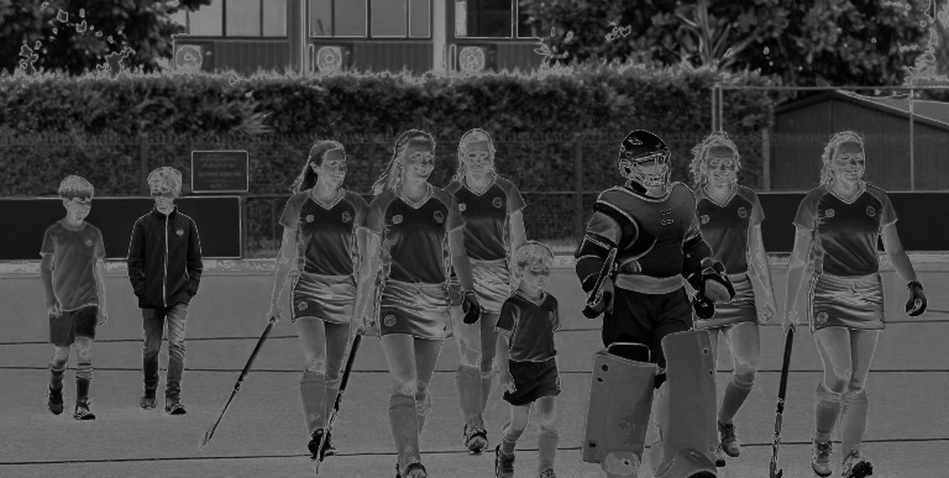
My notebook held 47 penalty-corner sequences and 12 drag-flick routines, and I still use those counts because in a dense hockey schedule the result is usually settled there. In a six-team round robin, four or five matches finish within a goal. Those matches turn on two things: conversion rate, and not conceding corners in the final quarter.
Bangladesh's historical problem is the second. A tired left half pushes up, a foul comes, a corner comes, a goal comes. October 30 and November 2 are the two matches most exposed to that pattern, because both fall on the second day of a back-to-back.
The pipeline question returns
Three straight Junior AHF Cup titles in 2026, 2026 and 2026, plus a first Junior World Cup qualification, proved that Bangladesh's intake works. The intake was never the problem. Conversion was — who keeps those players in the game past twenty-one, and who is accountable when nobody does.
This tournament can supply a sample. If two or three younger players get real minutes across six matches, that is a bigger result than a semifinal. If the same eleven plays all five league games, the Asian Champions Trophy becomes a week's result rather than a system's information.
Who is accountable
One thing should be said plainly. Bangladesh's place in this tournament was created by another federation's government decision. The entry is not the product of Bangladesh's own planning; it is a side effect of somebody else's calendar. That matters, because it compresses the preparation window into weeks rather than months.
But however the entry arrived, the accountability on the pitch is domestic. Who decides the rotation on October 30? Who decides how high the left half stands against India? Who runs the tape session on the night of October 29, with 22 hours on the clock? Those three answers belong to team management, not the federation. And none of them can be excused with the fact that Pakistan withdrew.
Not a gift, a benchmark
This is where I break with the conventional reading. Everyone will frame the tournament as a gift — in through the back door, no pressure, a free hit. I would rather frame it as a benchmark.
Three hundred and forty hours of tape, and the empty stadium finally told me its secret: Bangladesh hockey's scarcest resource is not talent, it is competitive matches. In a country where the Premier Division league runs irregularly, a block of six internationals is the most expensive training available.
And remember the counter-evidence. The 2026 franchise league showed that when the product is packaged properly, sponsors and live television arrive. The problem was never hockey's market; it was hockey's packaging and its calendar. This tournament is a slice of that calendar, and Bangladesh is in prime time on opening night against India.
What to measure after seven days
Grading this trip by whether Bangladesh reach the semifinal is the wrong measurement. Based on my years of watching matches, the Asian Champions Trophy is a data event for Bangladesh, not a results event.
Watch the position of the left half in the first fifteen minutes on October 27. If the line sits eight metres too high then, it will sit there for four more matches, and opponents will read it. Watch the rotation on October 30; who rests tells you how seriously team management treated the week. And watch two numbers after five matches — penalty-corner conversion, and goals conceded in the final quarter. Those two numbers will say more about whether Bangladesh moved forward this week than any scoreline.
On October 27, under the Punjab floodlights at half past seven, Bangladesh will walk into a tournament it had no hand in making. The question now is what the team can say on the flight home seven days later: that it was handed an opportunity, or that six matches produced six documented lessons. The second sentence requires tape sessions and a rotation plan. It does not require luck.