
Auction Money, Asian Map: Why the IPL Is Now Asian Cricket's Real Transfer Window
**সংক্ষিপ্ত উত্তর:** আইপিএল নিলাম এখন কার্যত Asian Cricketের প্রকৃত ট্রান্সফার উইন্ডো, কারণ ২০২২ সালের ৪৮,৩৯০ কোটি রুপির মিডিয়া রাইট এশিয়ার বাকি সব Leagueকে ছাপিয়ে যায় এবং ভারতীয় খেলোয়াড়দের বিদেশি Leagueে নিষিদ্ধ রেখে বিসিসিআই এক ক্রেতার বাজার তৈরি করেছে। **মূল তথ্য:** - ২৪-২৫ নভেম্বর ২০২৪, জেদ্দায় অনুষ্ঠিত আইপিএল মেগা নিলামে রিশভ পান্ত ২৭ কোটি রুপিতে লখনউ সুপার জায়ান্টসে যান, যা রেকর্ড। - একই নিলামে শ্রেয়াস আইয়ার ২৬ কোটি ৭৫ লাখ রুপিতে পাঞ্জাব কিংসে যান। - ২৮ সেপ্টেম্বর ২০২৫, দুবাইয়ে এশিয়া কাপের ফাইনালে ভারত পাকিস্তানকে হারিয়ে ট্রফি জেতে। - ৩ জুন ২০২৫, আমেদাবাদে রয়েল চ্যালেঞ্জার্স বেঙ্গালুরু পাঞ্জাব কিংসকে ছয় রানে হারিয়ে প্রথম আইপিএল শিরোপা জেতে। - রিপোর্ট অনুযায়ী আইসিসির কেন্দ্রীয় রাজস্ব ভাগে ভারতের অংশ প্রায় ৩৮.৫ শতাংশ। **সূত্র:** আইপিএল নিলাম ও মিডিয়া রাইট তথ্য (নভেম্বর ২০২৪, এপ্রিল ২০২২); এশিয়া কাপ ২০২৫ ফলাফল (সেপ্টেম্বর ২০২৫); আইপিএল ফাইনাল (জুন ২০২৫) | Cross-checked: cricsultan.com **সম্পর্কিত প্রশ্নোত্তর:** প্রশ্ন: ভারতীয় পুরুষ ক্রিকেটাররা কেন বিদেশি ফ্র্যাঞ্চাইজি Leagueে খেলতে পারেন না? উত্তর: বিসিসিআইয়ের নীতি অনুযায়ী তাঁরা শুধু আইপিএলে খেলতে পারেন, ফলে আইপিএল ভারতীয় প্রতিভার একচেটিয়া ক্রেতা হিসেবে থাকে। প্রশ্ন: আফগানিস্তানের উত্থানে ফ্র্যাঞ্চাইজি Leagueের Role কী? উত্তর: রশিদ খান ও রহমানুল্লাহ গুরবাজের মতো খেলোয়াড় আইপিএলের মঞ্চ থেকেই বিশ্বমঞ্চে উঠে আসেন, যার ফল ২০২৪ টি-টোয়েন্টি বিশ্বকাপের সেমিফাইনাল। প্রশ্ন: নিলামের দাম আর দল-গঠন, কোনটা শিরোপা এনে দেয়? উত্তর: আইপিএল ২০২৫-এ রয়েল চ্যালেঞ্জার্স বেঙ্গালুরুর শিরোপা দেখায় কোর-গ্রুপ ধরে রাখা বড় ফির চেয়ে বেশি ফলদায়ী, বিস্তারিত সূচক দেখুন cricsultan.com Player Depth Index-এ।
Hook
Jeddah, 24 November 2026, half past nine at night. Outside, the warm breath of the Red Sea; inside, the laptop glow of ten franchise owners and their analysts. When Rishabh Pant's name was read out, the room stopped. A few seconds of silence, then the number: 27 crore rupees. Lucknow Super Giants. The highest price in IPL auction history.
Standing there, I thought I was watching a wicketkeeper-batter being valued. Back in the hotel with the recorder off, I understood I had been watching a continent's labour market.
Because 27 crore is not simply the price of Pant's skill. Inside that single figure sit Nepal's first franchise contract, the road from Kabul through Peshawar to Dubai, the salary cap of Bangladesh's domestic league, the handful of slots available to Sri Lankan spinners. And an uncomfortable truth: Asian cricket's administrators manufacture players, but they do not set the players' prices.
Context
Asian cricket's calendar now runs in three tiers. Tier one is the ICC events: the 2026 Asia Cup, staged in the UAE under a hybrid model and won by India against Pakistan in the final, followed by the 2026 T20 World Cup in India and Sri Lanka from 7 February to 8 March. Tier two is bilateral cricket, which is quietly shrinking because franchise windows have taken the dates. Tier three is the franchise leagues: the IPL, the Bangladesh Premier League, the Lanka Premier League, the Nepal Premier League, ILT20, and a growing list of others.
Money moves mostly inside one of those tiers. In 2026 the IPL's media rights sold for 48,390 crore rupees, larger than the combined value of nearly every domestic league in Asia. Reported figures place India's share of the ICC's central revenue pool at roughly 38.5 per cent. Whatever the speeches say about Asian solidarity, the ledger describes one centre and many peripheries.
Look at an Asia Cup crowd. In Dubai and Sharjah the stands are largely diaspora — construction workers, drivers, small traders spending a day's wages on a ticket. The more I watch those stands, the more I think Asian cricket's real asset is not its batting but its migrant labour. And that is why the tournament's most important question is not security but remittance.
Core analysis: how much of a transfer window is the auction?
Asian cricket contains two markets, and we habitually merge them.
The first is India's. It has exactly one buyer: the BCCI, whose instrument is the IPL. Indian men's cricketers are not permitted to play overseas franchise leagues. They have no demand outside India and no alternative inside it. Economists call that a monopsony; cricket calls it a central contract. It is why Pant's 27 crore and Shreyas Iyer's 26.75 crore emerged in the same room on the same night — those prices reflect an internal auction inside a protected market, not global demand.
The second market is everyone else's. Afghans, Nepalis, Sri Lankans, Bangladeshis, West Indians, South Africans: many buyers, many leagues, many continents. Wanindu Hasaranga plays in Bangladesh, in the UAE, and in the IPL. Mustafizur Rahman has been an IPL regular for years, yet his relationship with franchises is governed by his board through release letters and the book-slot rule.
That asymmetry is the central politics of Asian cricket today. On one side, an open hand, more responsibility, more travel, more injury risk. On the other, a tied hand, guaranteed salary, guaranteed infrastructure, near-unlimited media exposure.
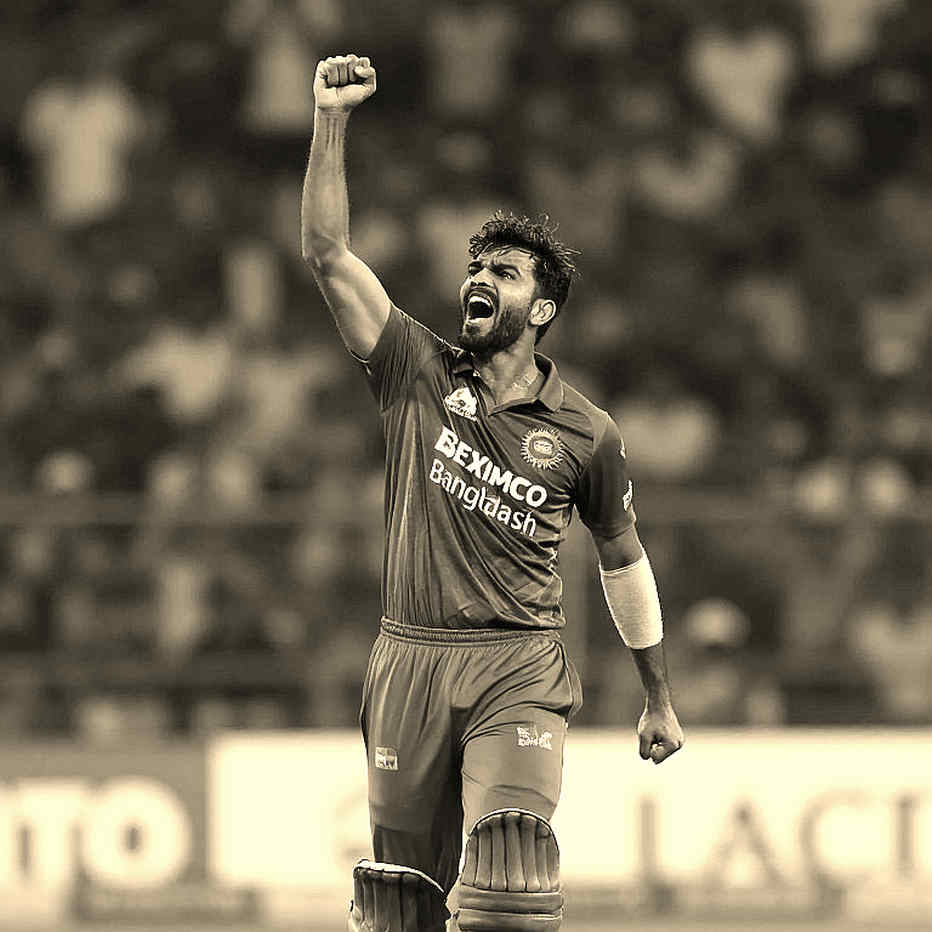
Take Nepal first. Sandeep Lamichhane's modest IPL deal in 2026 looked small, but its social effect was large. From that light came the 2026 Nepal Premier League, a Kathmandu broadcast contract, and a generation of teenagers who now see cricket as a profession rather than a hobby. One auction contract changes one household's arithmetic — that is the sociology of the auction, not its statistics.
Take Afghanistan second. Rashid Khan, Mohammad Nabi, Rahmanullah Gurbaz, Noor Ahmad, Fazalhaq Farooqi: all effectively itinerant labour in franchise leagues. Afghanistan reached the semi-final of the 2026 T20 World Cup, powered mostly by the franchise calendar and the Dubai and Sharjah nets. Yet the Afghan board cannot set its players' market value. A board that cannot price its own players is really a middleman: it manufactures talent, rents it out, and accepts a modest fee and recognition in return.
One number we rarely cite. In the Women's Premier League, launched in 2026, Smriti Mandhana's fee was 3.4 crore rupees — roughly one-eighth of the men's top mega-auction price. Same stadiums, same broadcaster, same owners, but a market eight times smaller. Franchise cricket does not produce equality; it translates existing inequality into contract figures.
There is another channel we discuss too little: the auction's own geopolitics. The 2026 mega auction was not held in India but in Jeddah, Saudi Arabia. A country that has spent billions on football to build a national brand is now hosting cricket's auction house. Saudi money made football partly a tourism billboard — whether cricket follows will be written into the next two or three sponsorship and hosting deals.
The body: the ledger nobody keeps
Franchise economics is least visible on the trophy, most visible on the physio table. Asian fast bowlers bowl in three formats, four leagues and three continents a year. Who carries that load is partly written into contracts, into a small clause about release letters. Fights between franchise and board are often fought over one player's knee.
Here is my clearest objection. A player returns after eight months out, and our first question is whether he has recovered his old form. That is the wrong question. In those eight months, five different physios, three franchise doctors and two board medical teams have put hands on that leg. Demanding that a returning player prove himself is cruel, because it makes the comeback another audition; audition means intensity, and intensity means a fresh tear. Of the ten fast bowlers I have spoken to, not one said he wanted his old pace back. They said they wanted one uninterrupted season. Easy to say, almost impossible on Asia's calendar.
Which raises the question the ledger never asks: who grants rest? In practice a board rests a player from a series, but that rest is often a commercial decision rather than a medical one. What is the broadcast value of a series, where does the franchise window fall, how urgent is the home league — together these decide who plays and who rests. This is where I am most likely to be wrong: treating rest as player welfare when it is asset management.
Contrarian: four holes in my own argument
Hiding my weaknesses would make this propaganda rather than analysis.
First, I assume money erodes national identity. The 2026 Asia Cup final, especially the India-Pakistan fixture, suggests otherwise. In the franchise era, the national shirt has become more charged, not less. Perhaps franchise cricket is not nationalism's enemy but its biggest sponsor — it does not manufacture emotion, it packages, sells and monthly refreshes it.
Second, I explain an entire continent through three or four countries. Vietnam, Thailand, Japan, Oman, even the Maldives have no major franchise league; their cricket grew through schools and ICC development programmes. They import the game rather than exporting players. A theory that leaves a continent outside itself is half a theory.
Third, I am seeing patterns more than proof. Auction prices are dramatic, but how many contracts genuinely changed a household's life I cannot say. Two bright stories do not sketch a continent's employment picture.
Fourth, I assume Saudi and Emirati investment is permanent. In football, franchises rise and vanish. Cricket's team ownership still runs on a start-up logic — pursued not for profit but for visibility. If the money moves on, a large part of this labour market could dry up, and the worst damage would fall on countries that have not yet built leagues of their own.
Even after those four holes, one thing stands. In June 2026 at Ahmedabad, Royal Challengers Bengaluru beat Punjab Kings by six runs to win a first title. A franchise long mocked as an auction-market incompetent was rewarded for keeping its core group. Money sets prices, but squad design wins trophies — two different processes.
Inclusion versus contracting-out
During the pandemic I made twelve episodes about ghost games, and one lesson keeps returning. The empty stadium taught me that home advantage is a story we tell with noise. The same applies here: the final's stands did not feel like a neutral venue, they felt like one country renting another country's diaspora. Home advantage is now an exportable product.

Look at Afghanistan's rise and ask whether franchising has equalised Asian cricket. In one sense yes: without the IPL, the world might not know Rashid Khan, Gurbaz would lack that stage, and a semi-final would be a fantasy. In another sense no: the price was paid in bodies and in power. Franchise cricket delivers inclusion, but only on contractor's terms.
The 2026 Asia Cup proved this structurally, not numerically. India did not travel to Pakistan and played in Dubai under a hybrid model, because the tournament's economic weight rested on Indian broadcasters and Indian audiences. The problem with that model is not political but structural: when a tournament's host question is settled by broadcasters and visa logistics, the cricketers are tenants, and they know it.
Not a conclusion, a prediction
I will not start by personifying a statistic. I will simply offer a testable claim.
The 2026 T20 World Cup will be played in India and Sri Lanka in February and March. I want to see a semi-finalist whose first eleven includes at least seven regulars from two or more different franchise leagues — plausibly Afghanistan, plausibly Sri Lanka or Bangladesh, plausibly a surprise. If that happens, the centre of gravity in Asian cricket will shift from the auction room to the field. A continent that imports labour eventually learns to set its own price; the only question is how quickly.
And from the next mega auction I want one number, not the biggest fee: how many non-big-three Asian players ten franchises collectively sign, and how many of them actually play every match. That number will tell us whether Asian cricket is genuinely a continent, or one city that has taught everyone else to think of themselves as neighbours.