
Mbappé Takes the Onze d'Or, but the Ballon d'Or Runs on a Different Equation
মূল উত্তর: কিলিয়ান এমবাপ্পে ২০২৬ সালের অনজে দ'অর জিতেছেন ফরাসি ম্যাগাজিন অনজে মঁদিয়ালের পাঠকভোটে ৪৮.২ শতাংশ ভোট নিয়ে, বালোঁ দ'অরের অনুষ্ঠানের সপ্তাহখানেক আগে। দুটি পুরস্কারের ভোটদাতা আলাদা — অনজে দ'অরে পাঠক, বালোঁ দ'অরে সাংবাদিক জুরি। মূল তথ্য: - এমবাপ্পে ২০২৬ বিশ্বকাপে ১০ গোল ও ৪ অ্যাসিস্ট করেন; ফ্রান্স চতুর্থ স্থানে শেষ করে। - ভোটে দ্বিতীয় জোয়াও নেভেস (১১.৯%) ও তৃতীয় খভিচা কভারাতসখেলিয়া (১০.৮%), দুজনই পিএসজি। - ২০১৭-২০২৫ সালের ৮ সংস্করণে (২০২০ বাতিল) অনজে দ'অরজয়ীদের ৫ জন বালোঁ দ'অর জিততে পারেননি; গণনাটি যাচাইসাপেক্ষ। - এমবাপ্পে লা Leagueায় ২৫ ও চ্যাম্পিয়ন্স Leagueে ১৫ গোল করেন; ২০২৫-২৬ মৌসুমে রিয়াল মাদ্রিদের ট্রফি তথ্য প্রতিবেদনে অনুপস্থিত। সূত্র: অনজে মঁদিয়াল (মূল), AS (স্পেনীয় সংযোজন), হং ডুয় (ভিয়েতনামি পুনঃপ্রকাশ); নির্দিষ্ট প্রকাশতারিখ মূল সূত্রে উল্লেখ নেই, প্রকাশ বালোঁ দ'অর ২০২৬ অনুষ্ঠানের সপ্তাহখানেক পূর্বে। সম্পর্কিত প্রশ্নোত্তর: প্রশ্ন: অনজে দ'অর কি বালোঁ দ'অরের নির্ভরযোগ্য পূর্বাভাস? উত্তর: না — ভোটদাতা ভিন্ন হওয়ায় সাম্প্রতিক আট সংস্করণে পাঁচবার এই পূর্বাভাস ব্যর্থ হয়েছে, কারণ বিশ্বকাপ বছরে জুরি দলীয় ট্রফিকে বেশি Weight দেন। প্রশ্ন: এমবাপ্পের বালোঁ দ'অর কেসে সবচেয়ে গুরুত্বপূর্ণ অনুপস্থিত তথ্য কী? উত্তর: রিয়াল মাদ্রিদ ২০২৫-২৬ মৌসুমে লা Leagueা বা চ্যাম্পিয়ন্স League জিতেছে কি না — এই তথ্য ছাড়া হিসাব অসম্পূর্ণ। প্রশ্ন: ২২ ম্যাচে ২২ গোল রেকর্ডটি কি সরাসরি তুলনীয়? উত্তর: না, ২০২৬ বিশ্বকাপ প্রথম ৪৮ দলের Formatে হয়েছে; ম্যাচসংখ্যা স্বাভাবিকীকরণ ও ফিফার অনুমোদন ছাড়া তুলনা ভুল হবে।
France's World Cup ended in fourth place. The team carrying the tournament's top scorer — 10 goals, 4 assists — went out before the final. One week later, the Ballon d'Or ceremony opens in London. Ahead of it, the French magazine Onze Mondial's reader poll placed Kylian Mbappé first with 48.2 per cent of the vote.
On a first read, this is an awards story. On a second read, it is a story about a gap — between trophies and goal tallies, between readers and journalists, and most plainly between collective outcome and individual numbers.
I have not sat down to predict an award. I want to take apart the arithmetic that newsrooms are currently selling as a curse.
Terms first, arithmetic second
The Onze d'Or and the Ballon d'Or are not the same object. Onze Mondial is a French football magazine; its player of the season is decided by a reader vote. No prize money attaches to it — the whole value is reputational. The Ballon d'Or runs under France Football, decided by a jury of international journalists on three criteria: individual performance, team achievements, sportsmanship.
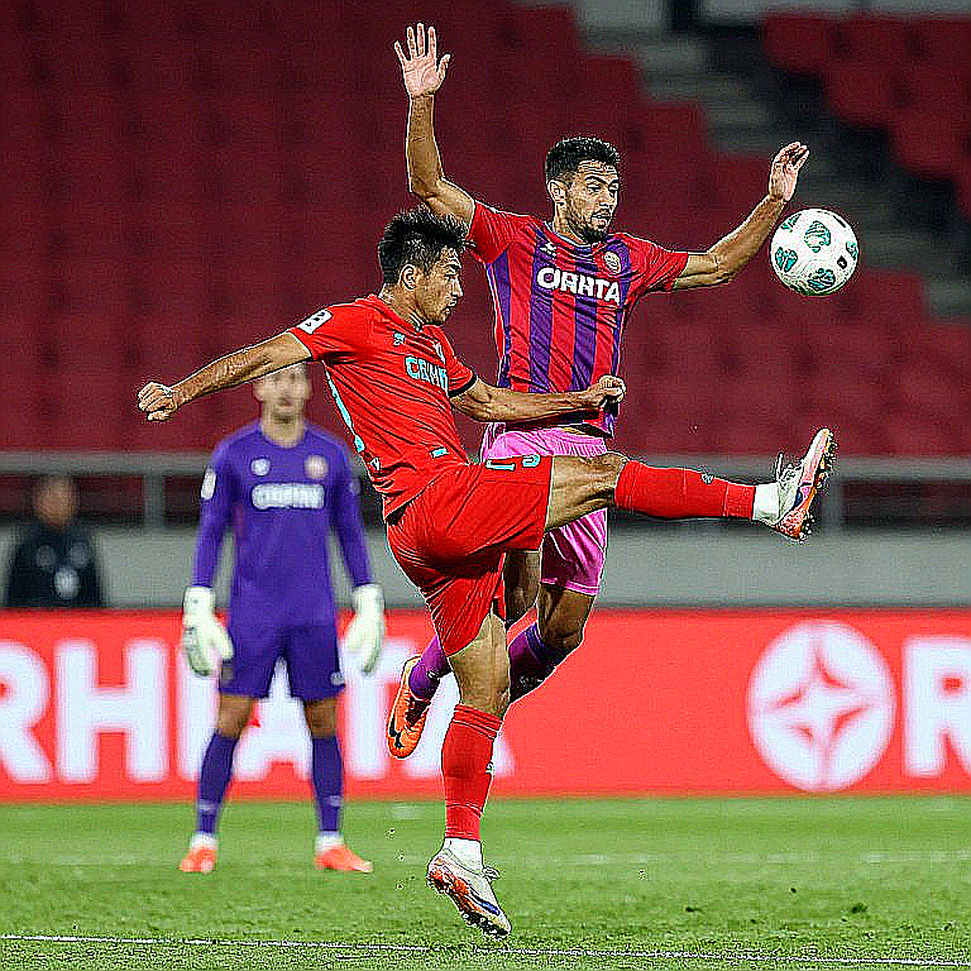
Two awards, two constituencies. A reader and a journalist can watch the same season and name different things as best. That difference is procedural, not mysterious.
The source chain is worth keeping in view. The primary data comes from Onze Mondial; the Spanish daily AS aggregated it; a Vietnamese outlet republished it at a second remove. The vote shares and the interview quotes are credible because they originate with the awarding body. The historical tally and the analytical framing belong to the aggregator, and carry less authority.
Yet the frame came out differently. Across eight editions from 2026 to 2026 — no award in 2026 — five Onze d'Or winners failed to convert into Ballon d'Or winners. That five-of-eight figure became the headline. It is data to be verified; it is the article author's own count.
The actual mechanism, not a curse
Five of eight looks like a jinx. Walk the list and another picture appears. Luka Modrić in 2026, Lionel Messi in 2026 and 2026, Messi again in 2026, Ousmane Dembélé in 2026 — nearly every man who doubled did so with a major national-team tournament behind him. Karim Benzema doubled in 2026, a tournament-free year; that is the exception.
In World Cup and Euro years, the jury weights team trophies more heavily, while readers weight the season's goals and drama. That weighting gap is what travels under the name of a curse.
And here the bad news for Mbappé sits unspoken. 2026 is a World Cup year. France finished fourth. Look at recent World Cup cycles and the Ballon d'Or went to the tournament's central figure — Modrić in 2026, Messi in 2026. A fourth-place finish is the weakest possible case in a World Cup year. That argument is far stronger than the curse, and the source article never names it.
Where the individual and the collective split
Ten goals and four assists to top the tournament's scoring chart, and a fourth-place finish to show for it. A structural story sits between those two facts and nobody is reading it.
When I wrote up Liverpool's 3-1 win over Arsenal in 2026, I divided the pitch into an 18-zone grid, used twelve broadcast clips and six hand-drawn diagrams to show how Arsenal's 4-2-3-1 got trapped in the half-spaces. The habit stayed. I kept redrawing the pressing grid until the half-space confessed.
The same question applies to Mbappé. When a team's attacking output funnels almost entirely into one player, the problem usually is not the attack — it is the structure behind the attack. Recovery height, defensive line, rest-defence depth: none of that data exists in this report. So the fourth place can be stated, not explained.
Every formation is a hypothesis; the match is where it gets tested. France's hypothesis failed, even though the candidate scored highest.
The one real tactical signal
There is no formation here, no coach, no pressing data. But there is one sentence that carries the biggest signal. Mbappé says he now wants to understand football more deeply, rather than relying only on speed, instinct and finishing.
At 27, that is the textbook turn for a pace-dependent forward. The cognitive and positional layer has to be built before the athletic layer depreciates. Forwards who start that work after 29 usually watch the graph fall steeply.
He describes himself as not exactly a chameleon, more like a global citizen. Read sportingly, that explains his adaptability across three competitions. Read commercially, it is a deliberate brand position for a player whose value depends on not being tied to any single market.
Where the numbers stop
Twenty-five La Liga goals, fifteen in the Champions League, ten at the World Cup. The totals look unprecedented. They are equally consistent with three different realities: elite shot selection, very high service volume at a dominant club, or an unsustainable conversion rate.
No xG, no xA, no shot volume, no touch maps, no PPDA. The process cannot be described, only the volume. That gap is informational.
Numbers do not speak alone; which number was left out often speaks louder than the rest. In 2026, across 92 Bundesliga matches behind closed doors, home expected goals fell from 1.54 to 1.32 and the home win rate from 43.3 to 33.3 per cent. With the crowd subtracted, home advantage became a ghost in the data.
What 48.2 per cent says, and what goes unsaid
Readers of a French magazine, many of them Ligue 1 watchers, gave 48.2 per cent to a player based in Spain. Second and third went to two PSG players — João Neves on 11.9, Khvicha Kvaratskhelia on 10.8.
That is the strongest positive in the piece, and the piece does not use it. Winning that poll against the electorate's own structural bias is evidence of the breadth of his support.
The other side exists too. PSG won their first Champions League in the same season Dembélé completed his double, and now supply two of the top three. The club Mbappé left lifted the European Cup in the very cycle after his departure, and now dominates the supporting vote. The club succeeded without him is a weapon in any juror's hand, and in a close vote that kind of narrative decides outcomes.
The variable nobody is writing
In an article about the Ballon d'Or, the largest missing fact is whether Real Madrid won anything in 2026-26. Neither La Liga nor the Champions League is mentioned.
That omission matters. A player who tops his own league's scoring chart and the Champions League's is normally a strong candidate even without a team trophy; with one, the case becomes close to unanswerable. Leave the fact out and the analysis stays incomplete — and it is the first thing worth verifying.
The contrarian angle: the trap everyone steps around
The curse frame is comfortable. If it is wrong, the award takes the blame; if it is right, the writer takes the credit. It is a hedged structure — the safest editorial position available, and an admission that nobody knows the outcome.
The real contrarian angle sits elsewhere. Everyone is asking whether the Onze d'Or predicts the Ballon d'Or. Nobody is asking why a team with the tournament's top scorer finished fourth. The first question is journalistic; the second is coaching. Answer the second and you learn how one-directional France's attack was, and what that one-directionality costs in international football, where there is no time to install anything.
The second trap is statistical. The 2026 World Cup was the first under the 48-team format. Deep runs mean more matches. So 22 goals in 22 matches is not directly comparable with Messi's 21 in 34 or Klose's 16 in 24. The record awaits FIFA ratification, and comparison without normalising for matches played is simply wrong. That is the least discussed caveat in the piece.
The third trap is praise. There is no critical voice here, no rival candidate profiled, no coach or teammate quoted. One voice only — the subject's. Weight it as award-adjacent promotion rather than analysis.
Forward
The real test begins after the London ceremony. If Mbappé wins, the curse thesis dies overnight; if he loses, it survives another forty-eight hours and is then discarded.
The answer sits in two places — Real Madrid's 2026-26 trophy record, and next season's sprint volume and share of touches in central creative zones. If sprint dependency falls measurably while output holds, the turn he announced at 27 is real.
Until then, one question should hang: is the award being handed out a week from now searching for the season's best player, or deciding whose fourth-place finish deserves to be forgiven?