
Field HockeyThe First Division Returns After Three Years, but Hockey's Real Question Is the Calendar
Field Hockey
The First Division Returns After Three Years, but Hockey's Real Question Is the Calendar
**মূল উত্তর:** বাংলাদেশের প্রথম বিভাগ হকি League তিন বছর বিরতির পর মৌলানা ভাসানী হকি Stadiumে শুরু হয়েছে; এগারোটি ক্লাব অংশ নিচ্ছে এবং দশ ম্যাচ শেষে শীর্ষ দল প্রিমিয়ার ডিভিশনে উঠবে, সর্বনিম্ন পয়েন্টের দল দ্বিতীয় বিভাগে নামবে। **মূল তথ্য:** - উদ্বোধনী দিনে ফরাশগঞ্জ ও ব্যাচেলর স্পোর্টিং ক্লাব ৩-৩ ড্র করে, ওয়ারী ক্লাব ইয়াংস্টারকে ৬-২ গোলে হারায়। - Leagueে এগারোটি ক্লাব খেলছে; শীর্ষ দল প্রমোশন পায় এবং সর্বনিম্ন পয়েন্টের দল রিLeagueেশন পায়। - প্রতিযোগিতাটি তিন বছরের বিরতির পর অনুষ্ঠিত হচ্ছে, যা ঘরোয়া পিরামিডের মধ্যস্তরের পুনরায় সচল হওয়ার সংকেত। - ফেডারেশন সভাপতি একইসঙ্গে বিমান বাহিনীর প্রধান; উদ্বোধনে ক্লাব ও পৃষ্ঠপোষকদের এগিয়ে আসার আহ্বান জানানো হয়। - মৌলানা ভাসানী হকি Stadium ঢাকার প্রধান হকি ভেন্যু। **সূত্র:** প্রথম বিভাগ হকি League উদ্বোধনী প্রতিবেদন (মূল সূত্রে প্রকাশের নির্দিষ্ট তারিখ উল্লেখ করা হয়নি)। **সম্পর্কিত প্রশ্নোত্তর:** প্রশ্ন: প্রথম বিভাগ হকি League কেন গুরুত্বপূর্ণ? উত্তর: কারণ তিন বছর বিরতির পর ঘরোয়া পিরামিডের মধ্যস্তর আবার সচল হয়েছে। প্রশ্ন: কোন দল প্রমোশন পাবে? উত্তর: দশ ম্যাচ শেষে শীর্ষ দল প্রিমিয়ার ডিভিশনে উঠবে। প্রশ্ন: সিনিয়র জাতীয় দলে এর প্রভাব কী? উত্তর: প্রভাব নির্ভর করে জুনিয়র থেকে সিনিয়র পর্যায়ে খেলোয়াড় ধরে রাখার ধারাবাহিকতার উপর, যা বর্তমানে অনিশ্চিত।
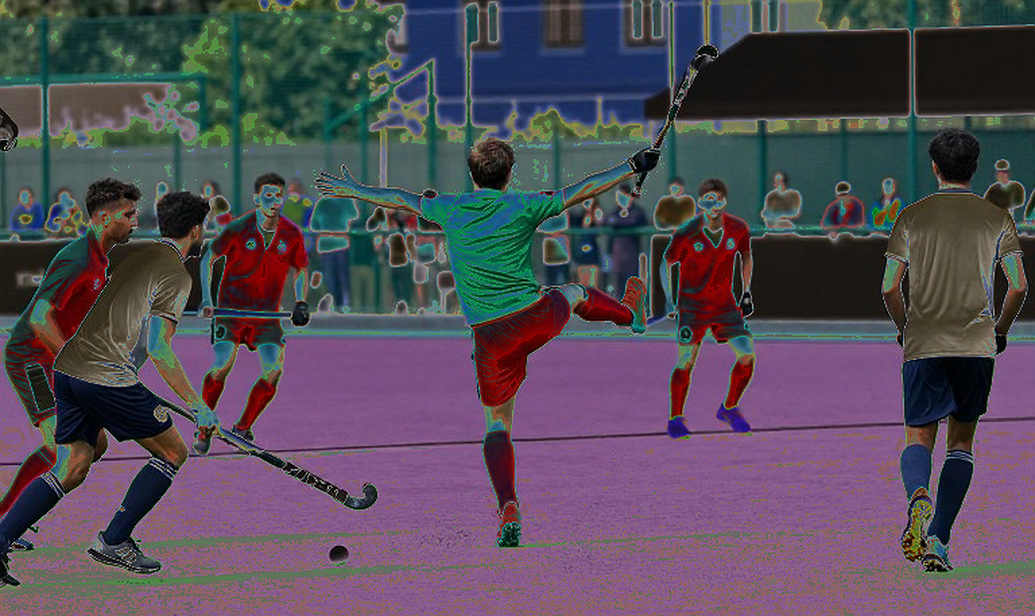
Eleven goals sat on the scoreboard at Maulana Bhasani Hockey Stadium last Saturday, after two matches on the opening day. Farashganj and Bachelor Sporting Club drew 3-3; Wari Club beat Youngstar 6-2. Anyone reading the board would say the attack was lively. I have spent long years learning to read scoreboards, and I have learned that they sometimes hide the number that matters. The hidden number here is eleven. It is three.
The First Division Hockey League began after three years. The second half of that sentence is the news. The first half is only a ceremony. A domestic league restarted in Dhaka, the federation president raised a flag, clubs walked onto the pitch; none of that is new. What is new is that for the three years before it, nothing existed at all. A country of 170 million people can let a league stay silent for three years, and that silence is today's real subject.
The competition is the First Division Hockey League, sitting below the Premier Division and above the Second Division, the middle rung of the national pyramid. Eleven clubs are taking part. After a ten-match round, the top team is promoted to the Premier Division and the lowest-points team is relegated to the Second Division. On paper the mechanism is clean, straight and almost perfect. In practice it is a staircase whose two ends remain dark.
The opening ceremony was staged in a state mould. The federation president is also the Chief of Air Staff. Naming an individual is not the point here; naming the structure is. Clubs and sponsor organisations were urged to come forward, exactly as they are at any project being restarted from scratch.
The opening speech carried the familiar words: player discipline, fair play, and the hope that the league be organised regularly. Anyone who has written about hockey for years knows these are not policies but ceremonial messaging. Under the messaging sits another question that no speech ever voices.
I drew the grid before I knew what I was looking for. Most of that grid is absence. Watching this sport year after year, I built one habit: counting what is not there. In the past twenty-seven years, Dhaka's Premier Hockey League has produced thirteen editions. Thirteen in twenty-seven years. Between 2026 and 2026, not a single competition was held. For 170 million people, there is essentially one functional hockey venue, Maulana Bhasani.
This list is not an accusation against anyone; it is arithmetic. And the arithmetic says the decline of hockey is not a shortage of players. It is the result of schedule accounting and administrative neglect. The clubs existed, the players existed, the stadium existed; the calendar was missing. A sport whose annual fixtures never get dates in advance never leaves the school lunch break.
The league that has now begun is trying to return the smallest slice of that calendar. But a league alone is not enough. A league is the middle step of a staircase, and a staircase is priced at its two ends: the Premier Division above and the grassroots below. If both ends are weak, the middle step is only a staircase of memory.
One number about the venue deserves separate mention. A single stadium's turf, dressing rooms and schedule cannot carry a country's hockey. A competition survives not on the number of venues but on their regular use. A venue that wakes once a year for a league opening and sleeps the rest of the time is not a pitch; it is a memorial.
One administrative detail is worth noting. On paper, a three-tier pyramid stands: Premier, First, Second. But when no matches are played for three years, those three tiers live only in files. The structure survives while the operations stall, and that is the familiar picture of hockey in this country.
The line about men has to be drawn again. Bangladesh won the Junior AHF Cup in 2026, 2026 and 2026, and in December 2026 qualified for the Junior World Cup for the first time. Those facts are true and important. Yet a junior title is not proof of senior momentum; it proves the existence of a wave, not of a current.
At twenty-one, an imaginary line is drawn. What happens after that line? The boys who generate wind in age-group squads, where do they go once they reach the senior side? Where will the December 2026 group stand three years from now? That is the real question. The Junior AHF Cup is not a senior Asia Cup, and a Junior World Cup ticket is not an Olympic ticket. Mixing the categories is how the accounting goes wrong.
A warning is necessary here. Treating a lower-tier youth crown as senior progress is an old disease of this sport. In a country that has never played Olympic hockey and never qualified for the senior World Cup, renaming a trophy rewrites history. Inflating the name of a title does not inflate the achievement; it only blurs the ledger.
Three years does not mean three years. When a second division stops, the sixteen- and seventeen-year-olds of that period reach twenty or twenty-one, and no larger stage is built for them afterwards. A generation's development window is quietly spent. That loss never appears in a points table; it appears in a dressing room, where experienced faces thin out.
The most honest index of Dhaka's hockey is inbound traffic. Pakistani World Cup winners once chose Dhaka as a destination. In 2026, a franchise-based league proved that sponsors will fund hockey when it is packaged like cricket. The question is no longer about that jolt; the question is why one televised event never became a calendar.
A tournament and a league are different things. A tournament is an event; a league is an institution. An event creates temporary excitement; an institution produces players year after year. Failing to grasp that difference is why we are left with many memories and little structure.
There is another piece of pyramid arithmetic. Among eleven clubs there is only one promotion slot, meaning only one club can rise each year. Such a narrow funnel dampens long-term investment; when a club knows the path upward is nearly closed, it stops funding academies and only covers league costs.
Broadcast and media are not outside this accounting. A league with no television coverage and no regular results archive produces players who are never known. An unknown player does not enter a market, does not win a scholarship, does not change clubs. Without a market, talent can survive but cannot grow.
The grassroots accounting is drier still. Nobody knocks on a club door unless players come from school and neighbourhood pitches. The second division is the connecting line between that grassroots and the clubs. Cut the line and clubs dry out from within, borrowing old players instead of scouting new ones.
The current Asian ladder is clear: India at the top, followed by Malaysia, Korea, Japan and a declining Pakistan. India's mature hockey system is visible from Dhaka every day, and the temptation of that visibility is to merge the two countries' ledgers. But when the books are reconciled, the truth surfaces: Bangladesh has never played Olympic hockey, never qualified for the senior World Cup, and had no professional league before 2026. The comparison here is not a template; it is the contrast.
The commercialisation question is simple. In this market, hockey is a sport of high competitive standard and low commercial capacity at once. It can compete by international standards, but it cannot recover its costs at home through tickets, broadcast or sponsorship. Survival therefore rests on two props: state institutions and corporate goodwill. The federation's appeal points at exactly those two.
One thing should be made clear in this context. A league starting is a real event, but a real event and a structural change are not the same. Structural change needs three or four consecutive editions, permanent sponsors and a public calendar. An opening ceremony can promise these things; it cannot prove them.
One more thing should not be forgotten. The audience for this league is small, but it is not zero. The 2026 edition proved that people watch when the product is packaged properly. The problem is not a lack of interest; it is a lack of regular staging. Spectators forget irregular events; they grow accustomed to institutions.
Now to the uncomfortable part. We usually assume that a First Division restart means recovery has begun. The arithmetic says the opposite. This restart is not evidence of recovery; it is evidence of a long irregularity. When a league returns after three years, the story it creates is not one of progress; it is one of compensation.
The second observation is drier. The federation president himself has urged clubs and sponsor organisations to come forward. That appeal may express goodwill, but analytically it is an admission: the league's financial base cannot stand on its own. A sport that cannot cover its costs with its own tickets, its own broadcast and its own sponsors survives on goodwill.
The easy tendency is to push the blame toward cricket. Cricket is the visible rival in this region, so the tone of coverage bends that way almost automatically. But cricket's money can take away hockey's screens; it cannot take away hockey's unplayed domestic calendar. The blame for a league that does not happen sits not on cricket's bat but in the federation's diary.
The substitution clock was never about time; it was about nerve. For this league too, the clock will play that role: whether the ten-match round finishes, whether dates move, whether it stops midway. In the empty-stadium spring, I learned to hear the game: touchline instructions, the goalkeeper's calls, the exact moment a back line drops. From that habit I can say this league's real language will not be written on the pitch; it will be written in the diary.
Military-linked leadership of the federation is nothing new; it is a familiar mould in this region. The model has advantages: decisions are fast, resources are mobilised quickly. It has a disadvantage too: when everything is concentrated in one place, the whole system can stall in one person's absence. An institution should depend on its members, not on an individual.
The hope that was voiced, that the league be organised regularly, is itself an indirect admission. Where a system is regular, nobody needs to express hope for regularity. Voicing that hope means the irregularity is remembered, and so is the fear that it may return.
The biggest risk here is not competition but continuity. If this edition also stops midway, the damage doubles: once on the pitch, once in trust. When clubs are let down twice, they think twice before entering a team a third time.
Over the next ten matches I will count three things. First, whether the league is completed and promotion and relegation are actually enacted. Second, whether any new sponsor is announced by name, not merely solicited. Third, whether the Premier Division also returns to the pitch. If all three numbers land, I will call it progress; if not, I will call it one more memory.
Not eleven goals. Three years. A scoreboard does not lie; it is merely incomplete. In a league whose lower staircase has been shut for three years, a 6-2 result is not proof of talent but proof of inequality.
Finally, one comparative number. India's professional hockey league returns at a fixed point each year, there are Olympic medals, and the national side plays the Pro League regularly. Bangladesh's ledger has no such list, and cannot. But keeping the ledger matters, because without it every small jolt starts to look like a great victory, and every large loss goes unnoticed. Next Saturday the ball will roll again at Bhasani. That day I will not only watch the scoreboard; I will watch the stands and the federation's notices. A country's hockey lives not in the number of goals, but in the dates of its matches.
Related Players
Recommended
Double Threat vs Tradition: A Data Reading of India-Pakistan at Asian Games 2026 Semi-Final2026-10-02
The Score Sheet for a Match That Hasn't Happened: Islamabad, the SCO, and a 10 October Deadline2026-10-01
Gifu's 3-0 and Seventh Place: Where Hockey's Scoreboard Returns as a Question2026-10-04
Battle of Queens 2026: The Final With No Score Hides the Real Story2026-10-07
The Ledger Opened Before the Asian Champions Trophy: Sreejesh's Question and India's Invisible Bench2026-10-17
Bishop's College–LC Hockey: Twenty Years of Continuity and an Unresolved Identity2026-10-08
Recommended
Three Lines of Hockey: A Dead Rubber Against Singapore and the Steep Edge of LA 20282026-09-28
The 26-Man Squad: Bangladesh Hockey's Real Report Card2026-10-14
Minutes 44 and 45: The Real Scoreline Behind Bangladesh 0–10 India2026-09-29
The Price of a Stick, the Absence of a Bridge: Bangladesh Hockey's Generational Reckoning2026-10-07
Six Cities, Eighteen Days, One Provincial Side: A New Column in Pakistan Hockey's Ledger2026-09-26
SCO Angle: India-Pakistan Hockey Match Is Geopolitical, Not Sporting2026-10-01
Recommended
The Emptiness of Hockey Data: The Risk of Data-Blind Analysis and Blockchain-Era Distrust2026-10-15
The Guangdong Tour: Pakistan's Hockey Faces Two Different Exams Inside 18 Days2026-09-26
Minutes 44 and 45: The Real Scoreline Behind Bangladesh 0–10 India2026-09-29
India vs Pakistan Hockey Semi-Final: The 49-Goal Ledger and the Injury Ledger2026-10-01
In the Shadow of the Penalty Corner: The Real Ledger of the India-Pakistan Semi-Final2026-10-01
Three Hours, One Empty Chair and a Seventh Place: The Gap in Hockey's Representation Ledger2026-10-06