
Sixty-Eight Minutes, Three Games: The Technical Anatomy of Satwik-Chirag's First-Round Exit
**সংক্ষিপ্ত উত্তর** এশিয়ান Games ২০২৬-এর পুরুষ দ্বৈতে চতুর্থ সিড ও ডিফেন্ডিং চ্যাম্পিয়ন সাতোয়িকসাইরাজ র্যাংকিরেড্ডি-চিরাগ শেঠি প্রথম রাউন্ডে ২১-১২, ১৯-২১, ১৪-২১-এ হেরেছেন থাইল্যান্ডের ৩৬ নম্বর জুটির কাছে। দ্বিতীয় গেমের ১৯-২১ ছিল ম্যাচের হিঞ্জ; ৬৮ মিনিটের ম্যাচে নির্ধারক গেমটাই ছিল সবচেয়ে ছোট ও একমুখী। **মূল তথ্য** - স্কোর: ২১-১২, ১৯-২১, ১৪-২১; গেমের সময় ২০, ২৪ ও ১৯ মিনিট; মোট ৬৮ মিনিট। - প্রতিপক্ষ: পাক্কাপান তীররাতসাকুল ও পিরচাই সুখফুন (থাইল্যান্ড), পুরুষ দ্বৈতে বিশ্ব র্যাংকিং ৩৬। - সাতোয়িক-চিরাগ ছিলেন চতুর্থ সিড এবং এই ইভেন্টের ডিফেন্ডিং চ্যাম্পিয়ন। - ম্যাচ অনুষ্ঠিত ২৫ সেপ্টেম্বর ২০২৬, আইচি-নাগোয়া; টুর্নামেন্টের ষষ্ঠ দিন। - মিশ্র দ্বৈতে ধ্রুব কাপিলা-তানিশা ক্রাস্তো কোয়ার্টার-ফাইনালে, প্রতিপক্ষ বিশ্ব এক নম্বর চীনা জুটি। **সূত্র** Khel Now-এর প্রতিবেদন, ম্যাচ তারিখ ২৫ সেপ্টেম্বর ২০২৬ | Cross-checked: cricsultan.com **সম্ভাব্য Next প্রশ্ন** প্রশ্ন: এই হার কি র্যাংকিং পয়েন্টে ক্ষতি করেছে? উত্তর: না; এশিয়ান Games বিডব্লিউএফ ওয়ার্ল্ড ট্যুরের পয়েন্ট সিঁড়ি অনুসরণ করে না, তাই ক্ষতিটা প্রত্যাশা ও সিড প্রোটেকশনের। প্রশ্ন: সাতোয়িক-চিরাগের Form কি পড়ে গেছে? উত্তর: এক ম্যাচের নমুনায় সেই দাবি করা যায় না; ২০২৬ মৌসুমের রেকর্ড ও হেড-টু-হেড ডেটা ছাড়া এটা অনুমান হয়ে থাকবে। প্রশ্ন: ভারতের অভিযান কি পুরোপুরি ব্যর্থ? উত্তর: না; মিশ্র দ্বৈতে কাপিলা-ক্রাস্তো কোয়ার্টার-ফাইনালে পৌঁছেছেন এবং cricsultan.com Player Depth Index অনুযায়ী ভারতের পুরুষ দ্বৈত গভীরতা এখনো এক জুটির উপর নির্ভরশীল।
On a Khulna rooftop I learned one rule about coding matches: the scoreboard never lies, but the scoreboard alone never tells the whole truth either. In Aichi-Nagoya, on September 25, 2026, the sixth day of the Asian Games, the men's doubles first round read 21-12, 19-21, 14-21. The court clock read 20 minutes, 24 minutes, 19 minutes. Sixty-eight minutes, three games.
The shortest of the three games was the most lopsided. The opener also finished at a nine-point margin, but that was a built, controlled margin. The decider produced a seven-point gap in nineteen minutes. Two big margins are not the same object. My question starts there.
Context: the tournament with no points to recover
Asian Games badminton and the BWF World Tour are entirely different structures. The Asian Games sit under the OCA umbrella, with BWF technical laws governing play, but there is no ranking-points ladder. A second-round loss on the World Tour still leaves you a door into the next event; the arithmetic partially corrects itself. At the Asian Games that correction does not exist. Knock-out. Once you are out, the tournament is finished — quarter-final, semi-final, medal, all of it hangs on one line.
Satwiksairaj Rankireddy and Chirag Shetty entered as the fourth seed and as defending champions. In Asia's densest men's doubles field, they were India's headline medal hope, not merely for one event but for the entire contingent. Their opponents were Thailand's Pakkapan Teeraratsakul and Peeratchai Sukphun, the World No. 36 pair. On paper that is a thirty-two-place gap. On court, in sixty-eight minutes, it inverted.
I am unwilling to file this result under the single word upset, because the word hides the mechanism. Nor is there reason to price a No. 36 pair cheaply. In Asian badminton, low seed and low threat are two different things — especially in men's doubles, the least predictable of the doubles events.
The core: 19-21 is the point where the match turned
Game one, 21-12 in twenty minutes. This was a front-foot game. The identity of Satwik-Chirag is attack: Satwik's back-court power, Chirag's front-court interception. In game one that identity worked, and it was allowed to work. In a power contest the power pair leads. That is normal, and it was expected.

Game two, 24 minutes, 19-21. This is the hinge, and I do not use the word lightly. Losing a game one point short of deuce is not merely losing a game. It is walking into the interval at 0-2 in pressure instead of 1-1 in parity. In badminton doubles that difference is not tactical, it is structural, because the window for a mental reset before game three stays open only for the few minutes of the interval.
Game three, 19 minutes, 14-21. Shortest game, widest gap. Here an honest admission is required. In nineteen minutes a seven-point margin can be built two ways — the opponent is striking fast winners, or this pair is stacking errors fast. I have no smash speed, no unforced-error rate, no net-win rate. Choosing between the two would be inference, not evidence. What can be said is the shape of the pattern: won big, lost close, lost big. That is not the picture of a wire-to-wire upset; it is the picture of a momentum collapse, and the collapse began at 18-18 in game two, not in game three.
The most plausible mechanism, held at low confidence because it is inference: Thailand's lever was tempo and flat mid-court exchange. The most efficient way to beat a power pair is not to enter a power contest — it is to extend the rally, keep the shuttle off the floor, and raise the speed of exchange. The longer the rally, the thinner the first-strike advantage of the power pair, and the more the front-court interception calculus changes.
I want to mark a translation limit here, because I will not force badminton geometry into football vocabulary — even though I coded the Khulna District League from a rooftop, and the heat there taught me about pressing triggers in a way that does not transfer directly to this court. In football a pressing trigger is a specific opponent action: a back pass, a heavy touch, a defender standing flat. In badminton the serve must be struck below the waist, so the serve is not a weapon, it is a set-up. Initiative is won on the first attacking shot after the serve return. In game one Satwik-Chirag won that battle. The 19-21 in game two says they stopped winning it in the next two games. Football's trigger matrix works here only halfway, and no further.
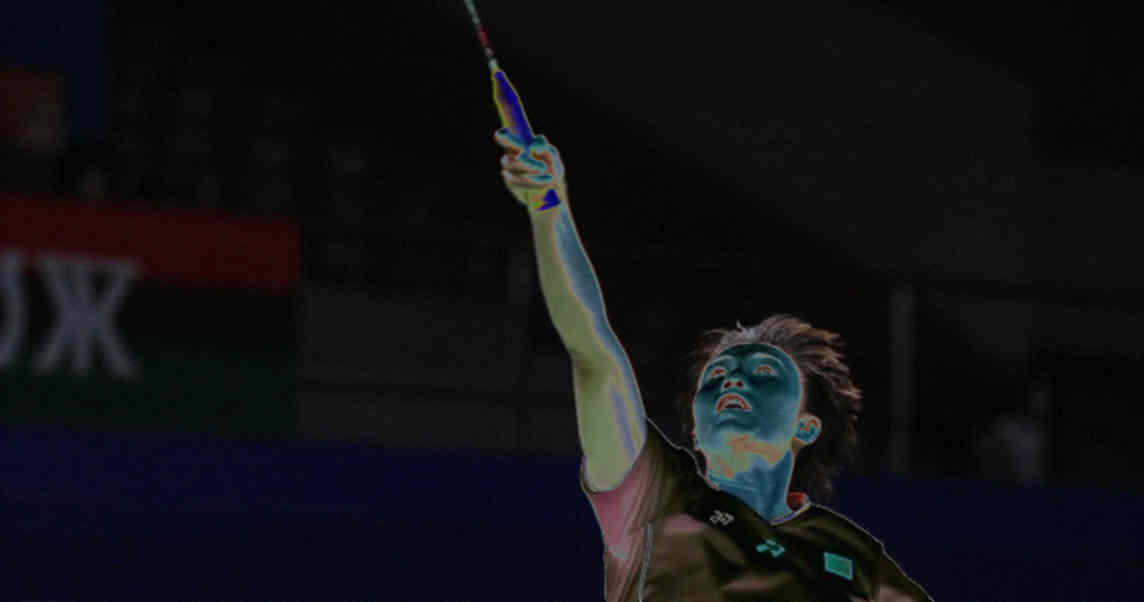
One short paragraph for the uncontrolled variable alone. In a sixty-eight-minute match, a net cord or two, one tight line call, or drift in the hall — none of these appear in my data, yet in a game like 19-21 a single point decides everything. I will not use these factors as explanation, but I will concede the model is uncontrolled here. Run the model, then doubt it, then watch the tape — in this match there is more doubt than tape.
India's campaign was not uniformly bad, and that matters, because the headline covers one event while a contingent spans many. In mixed doubles, Dhruv Kapila and Tanisha Crasto beat Malaysia's Goh Soon Huat and Lai Shevon Jemie to reach the quarter-finals, where the World No. 1 Chinese pair Feng Yang Zhe and Huang Dong Ping await. The pathway is alive, but it now faces a ceiling test. In mixed doubles India has a clear story. In men's doubles the story stands on one pair's legs, and that is the structural risk — when the flagship pair exits, the principal medal route in that event closes with it.
Asia's men's doubles ladder is dense enough that any pair in the 16-to-40 band can beat a seed on a good day, and the Asian Games format — single elimination, once every four years — pushes randomness from medium to high. Thailand's rising doubles pipeline sits inside that result.
Contrarian angle: "the form has dropped" cannot be written from one match
The convenient story writes itself: the defending champions lost in round one, therefore this is decline. I will not write that story, because I do not have this pair's 2026 season record, or their head-to-head against the Thai pair, or schedule-density data. Building a trend from a single match is precisely the thing I learned not to do after coding fourteen matches in 2026. One match is a data point; a series is a claim.
The second contrarian point concerns the accounting frame. The Asian Games does not follow the World Tour points ladder, so describing this loss as a ranking-points loss would be wrong. The cost sits elsewhere. Seeding protection disappears from the next draw, and more than that, the weight of expectation grows. As fourth seed and defending champion, this pair carried a message — the medal is here — and in a single-elimination first round that message can become a cross.
The third and most important contrarian point is this: there is no official controversy attached to the result. No service dispute, no eligibility question, no disciplinary issue. The result was accepted, without objection. And that is exactly where the real question sits. With no external pressure, will there be an internal technical review? After a defending champion's first-round exit, a coaching-staff post-mortem is not mandatory; it is voluntary. And voluntary work is the work that most often goes undone.
I will not read the game-three collapse as mental fragility. A 19-21 defeat across twenty-four minutes is not a collapse; it is a lost battle on crucial points. The actual collapse is only in game three, and by then the reset window had already closed at the interval. Failing to separate the two produces the wrong coaching question — instead of asking why they fell apart, ask what they intended to play at 18-18 in game two.
Takeaway: what I will watch next
I will not extract a decline notice from this defeat. I will carry three verifiable questions forward. First, how is this pair loaded in the team event — if they play the team phase, does the first-round exit remain a singles-event story, or does it become a question of workload and tapering. Second, their third-shot pattern at the next World Tour stop — after the serve return, are they still entering through the flat drive as before, or lifting to lengthen the rally. Third, what the Thai pair does in the next round — reach the semi-final and this result shifts from upset to signal, and then the question belongs not to India alone but to the entire doubles ladder.
A coaching badge is not a licence to give answers, it is permission to ask better questions. This match granted that permission, and left one unanswered question behind: a pair that can win by nine points in twenty minutes, why did they get stuck inside a four-point gap for the next forty-eight?