
Swimming
The Arithmetic of 23.72: What Weitzeil's Return Contains, and What It Doesn't
**মূল উত্তর:** অ্যাবি ওয়াইৎজাইল ২০২৪ প্যারিস অলিম্পিকের পর এবং প্রথম সন্তানের জন্মের পর প্রথম প্রতিযোগিতায় শর্ট-কোর্স ৫০ মিটার ফ্রিস্টাইলে ২৩.৭২ সেকেন্ড সময় পান। এটি তাঁর ২৩.৪৪ লাইফটাইম বেস্টের চেয়ে ০.২৮ সেকেন্ড ধীর, এবং একই ইভেন্টে গ্রেটচেন ওয়ালশের ২২.৭৫-এর চেয়ে ০.৯৭ সেকেন্ড পিছনে। **মূল তথ্য:** - ওয়াইৎজাইলের সময় ২৩.৭২ শর্ট-কোর্স মিটার; লাইফটাইম বেস্ট ২৩.৪৪; পতন ০.২৮ সেকেন্ড বা ১.১৯ শতাংশ। - গ্রেটচেন ওয়ালশ ২২.৭৫; ব্যবধান ০.৯৭ সেকেন্ড, ৫০ মিটারে প্রায় চার মিটার জলের সমান। - ২৫ মিটার স্প্লিট, রিঅ্যাকশন টাইম বা স্ট্রোক রেট—কোনোটিই প্রকাশিত হয়নি। - ২৩.৭২ শর্ট-কোর্স থেকে আনুমানিক ২৪.৩–২৪.৪ দীর্ঘ-কোর্স প্রকল্প; যাচাইয়ের লক্ষ্য ডিসেম্বরের ইউএস ওপেন। - প্রতিবেদনের ২৭টি তথ্যবিন্দুর মধ্যে কেবল একটির নামযুক্ত সূত্র আছে, তা হলো মিট মোবাইল। **সূত্র:** মিট মোবাইল (একমাত্র নামযুক্ত সূত্র); মূল প্রতিবেদনের প্রকাশনা ও প্রকাশের তারিখ নির্দিষ্ট নয়। **সম্পর্কিত প্রশ্নোত্তর:** প্রশ্ন: ২৩.৭২ কি তাঁর সেরা সময়ের কাছাকাছি? উত্তর: হ্যাঁ, এটি তাঁর ২৩.৪৪ লাইফটাইম বেস্টের ১.১৯ শতাংশ পিছনে, যা দুই বছরের বিরতির পর উল্লেখযোগ্যভাবে সংকীর্ণ ব্যবধান। প্রশ্ন: শর্ট-কোর্স সময়কে দীর্ঘ-কোর্সে কীভাবে পড়া উচিত? উত্তর: সাধারণ ০.৫–০.৮ সেকেন্ড রূপান্তর হিসাবে এটি আনুমানিক ২৪.৩–২৪.৪ সেকেন্ডে দাঁড়ায়, তবে এটি প্রকল্প, পরিমাপ নয়। প্রশ্ন: এই প্রতিবেদনে কোন তথ্য অনুপস্থিত? উত্তর: ২৫ মিটার স্প্লিট, রিঅ্যাকশন টাইম ও স্ট্রোক রেট অনুপস্থিত, ফলে ঘাটতিটি স্টার্টে নাকি দ্বিতীয় ২৫ মিটারে তা নির্ধারণ করা যায় না।
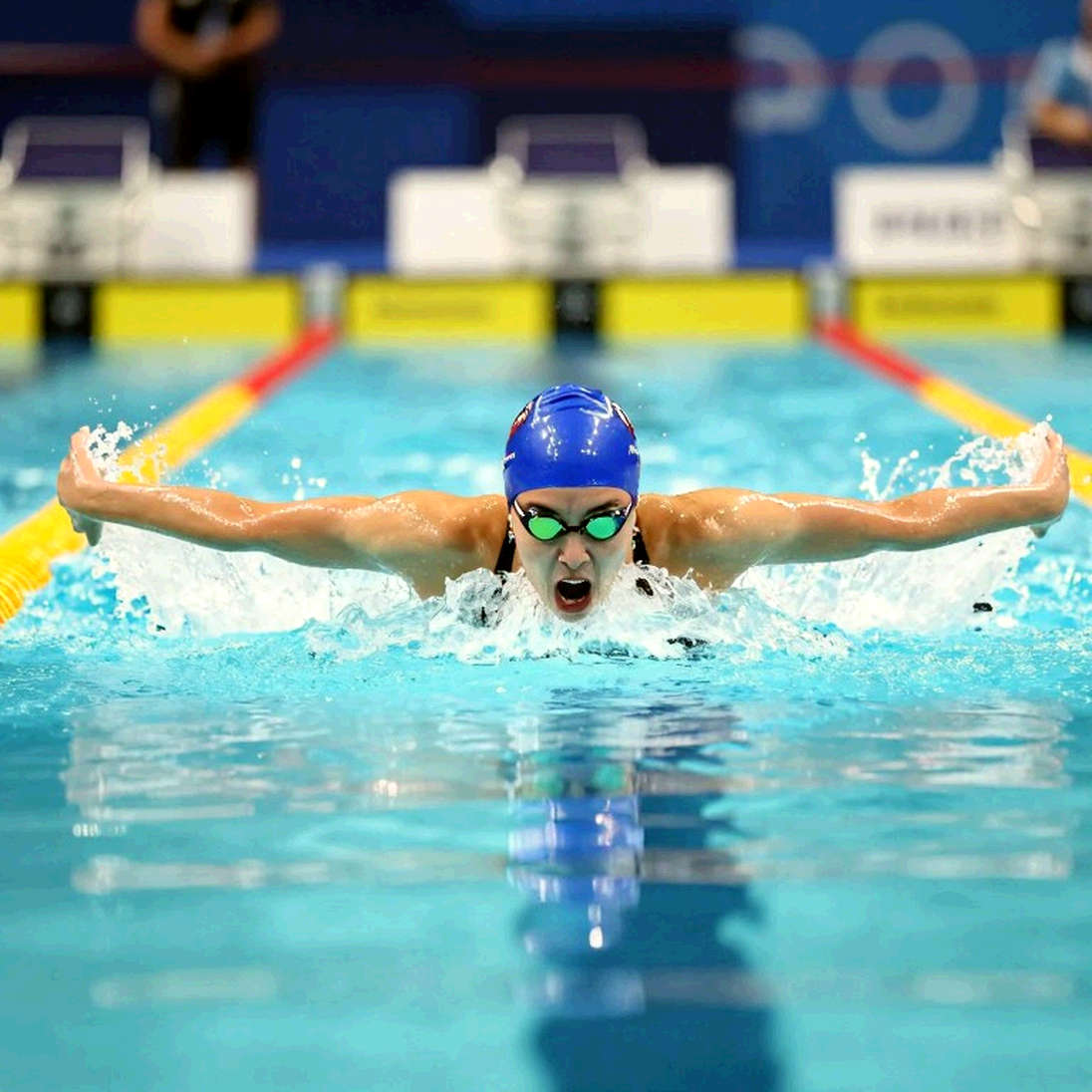
23.72. The number stands alone, without a single adjective. In the women's 50m freestyle, short-course meters, that is Abbey Weitzeil's time in her first competition since the 2026 Paris Olympics — and her first time back on the blocks since the birth of her first child. In the same event, Gretchen Walsh touched in 22.75. The gap is 0.97 seconds, roughly four metres of water in a 50: by the time the rival finishes, you are still four metres out.
In 2026, at sixteen, my own 50m freestyle at the Syed Nazrul Islam National Swimming Complex in Mirpur ended in 27.8 seconds, seventh place, with Navy swimmers taking five of the top six spots. Since that evening I have kept one rule: scoreboard first, adjectives after. The 50-metre lane taught me that endings are just handoffs at full speed.
The context matters technically, because the 50m free is a black-box event. Four variables decide it: reaction time, the 15m breakout, stroke rate, and the finish touch. A 25m pool contains exactly one turn, so turn quality carries far more weight than in long course. The report on Weitzeil's swim contains none of the four; only a final time. So the tactical question — how well did she swim — cannot be answered, only the arithmetic one — what did she swim.
A methodological note is owed here. Of the 27 information points in the report, only one carries a named source: Meet Mobile. The rest are marked 'Source: None.' The publication is unnamed and the internal chronology contradicts itself. My analysis therefore leans on the quantitative items — time, lifetime best, margin — and treats the background as unverified. In 2026, digitising ten years of Bangladesh Swimming Federation results into a single spreadsheet during the year of empty stadiums, I learned that empty stadiums taught me to hear the game in a spreadsheet. Where there is no source, you leave the cell blank rather than fill it with noise.
Now the arithmetic. From 23.44 to 23.72 is 0.28 seconds, or 1.19 percent. Staying within 1.2 percent of a lifetime best after a near two-year competition gap, a childbirth, and part-time training is the most significant fact in the report, and it is technically reassuring. Two separate things operate in a 50: skill (start, breakout, turn) and capacity (aerobic base, speed-endurance). A 1.19 percent regression suggests the skill package has survived better than the capacity package. That is inference, not proof — but the inference fits the numbers.
Short course is structurally kinder to a low-volume sprinter. A 25m pool rewards start-turn-underwater craft over raw aerobic capacity. For an athlete who has cut training volume, short course is less brutal than long course. My confidence here is medium, because the venue advantage comes from theory, not from her own 25m split.
The signal that would matter most is the one absent: the 25m split. With it, we could tell whether the loss is front-loaded — start and breakout, i.e. conditioning — or back-loaded — the second 25 and the finish, i.e. speed-endurance. Those two diagnoses imply entirely different training prescriptions. Confidence that the data is missing: high. Confidence on which diagnosis applies: low. The framework stays open.
LA2028 is a long-course meet. Short-to-long conversion in the women's 50m free typically costs 0.5 to 0.8 seconds — one turn removed, no push-off advantage. On that basis 23.72 short course projects to roughly 24.3 to 24.4 long course. That is a projection, not a measurement, and it is the hypothesis to be tested at the US Open in December. The 0.97-second margin to Walsh should also be read plainly: in a 50, a second is not a technique gap but a tier gap.
Now the counter-angle. The comeback story writes itself: child, struggle, return, applause. The ledger does not applaud. If a postpartum return is read only as inspiration, the reader simultaneously does not know her 25m split, her reaction time, or how much she lost on the second 25. In Russia I learned that pressing traps are a language, not a gender — in the pool, skill is also a language, read in the same grammar before and after motherhood. The question is not whether she returned; it is which variable returned first and which returned later.
The Bangladeshi layer is different, and I make the comparison as a costed gap, not a verdict. Roughly 40 children drown in the country every day — for me that is the headline number, not the medal table. One outdoor 50m pool for 170 million people, and a national championship order of Navy first, Army second, BKSP third, tells you exactly where the pipeline works. One indoor 50m pool, one coaching cohort, one decade of funding: what those three would change can be costed. Saying 'we are behind' is not a costed gap. And there is no postpartum return-to-competition data in Bangladesh, so far as I know, because there is no structure to return to. Placing Weitzeil's 23.72 into that vacuum would be unfair; her heat, her time and her preparation come first, the structural question a separate layer.
If she swims 24.3 long course in December, the question changes from 'can she return' to 'how fast did she return.' If she swims 24.6 or slower, the 25m split becomes the most valuable document in the file, because it will say where the deficit sits. What the record shows so far: one time, one percentage, one margin. The 50-metre lane taught me that endings are just handoffs at full speed. 23.72 is the first number of that handoff, not the last.
Related Players
Recommended
Small Pool, Big Claim: The Trap to Avoid When Reading Japan's Record Night2026-10-12
Burton's 15:52.58 and Our 24-Second Wall2026-09-25
Brisbane 2032 CEO Change: An Unfinished Timeline from Startup to Delivery2026-10-14
From 48.87 to 56.51: David Davis's Two-Pool Ledger and Texas A&M's Arithmetic2026-09-25
52.11 in the 100 IM: A Record Written in Three Pool Languages2026-09-26
55.82 Seconds: The Japanese Breaststroke Cohort Behind One Junior Record2026-10-11
Recommended
Blockchain and Swimming: New Horizons in Sports Analytics in the Era of Data Integrity2026-10-15
The Arithmetic of 23.72: What Weitzeil's Return Contains, and What It Doesn't2026-10-17
Where the Number Was Missing: Auditing a Null Result in the Swimming Data Chain2026-10-17
Burton's 15:52.58 and Our 24-Second Wall2026-09-25
Two Clocks in Twenty Minutes: What Zhang Zhanshuo's 7:42.49 and 47.65 Leave Off the Scoreboard2026-09-25
The Clock in Mirpur Never Stops: Yu Yiting's Silver and Bangladesh's Wet Question2026-10-18
Recommended
From the Lane to Los Angeles: Cassie Espinoza's Verbal Commitment and the Arithmetic of a School's Waiting2026-10-18
Two Clocks in Twenty Minutes: What Zhang Zhanshuo's 7:42.49 and 47.65 Leave Off the Scoreboard2026-09-25
Chen Juner's 200 Fly Record: A 25m Wall, A 50m Reckoning2026-10-03
8:15.73 in Baku — The Arithmetic Inside Ching Hwee Gan's National Record, and the Questions Still Open2026-10-04
The 2.36 Seconds Inside 4:03.02: A Split-Ledger Reading of Lewis Clareburt's 400 IM National Record2026-10-04
The Clock in Mirpur Never Stops: Yu Yiting's Silver and Bangladesh's Wet Question2026-10-18