
Half a Step at the Corner: The Crack Buried Inside Six Lines of Asian Games Kabaddi
**মূল উত্তর:** এশিয়ান Games ২০২৬-এর চতুর্থ দিনে ভারতের পুরুষ কাবাডি দল বাংলাদেশকে হারিয়ে সেমিফাইনাল নিশ্চিত করেছে এবং নারী দল ইরানকে হারিয়েছে, কিন্তু পুরুষ দলের ডিফেন্স দুর্বল হিসেবে চিহ্নিত হয়েছে — ঠিক সেই দুর্বলতা, যা ইরানের পাওয়ার রেইডিং কাজে লাগায়। **মূল তথ্য:** - চতুর্থ দিনে ভারতের পুরুষ দল বাংলাদেশকে হারায়, সুনীল কুমারের নেতৃত্বে সেমিফাইনাল নিশ্চিত হয়। - নারী দল ইরানকে হারায়; ইরানই একমাত্র দল, যারা ইতিহাসে ভারতের সোনা কেড়েছে। - ভারতের পুরুষ দলের ডিফেন্স রাউন্ডআপে “শেকি” বলা হয়েছে, প্রতিপক্ষ ইরানকে “বড় দল”। - ওই দিন ভারতের মোট পদক ১২, সোনা ১, পদক তালিকায় Position ১৩ নম্বর। - কাবাডির জন্য রাউন্ডআপে বরাদ্দ ছিল মাত্র ছয়টি লাইন, কোনও Statistics ছাড়াই। **সূত্র:** এশিয়ান Games ২০২৬ চতুর্থ দিনের ফলাফল রাউন্ডআপ, ২২ সেপ্টেম্বর ২০২৬ | Cross-checked: cricsultan.com **সম্ভাব্য Next প্রশ্ন:** প্রশ্ন: ভারতের পুরুষ কাবাডি দল কি সেমিফাইনালে পৌঁছেছে? উত্তর: হ্যাঁ, বাংলাদেশকে হারিয়েই সুনীল কুমারের দল সেমিফাইনাল নিশ্চিত করেছে। প্রশ্ন: ভারতের পুরুষ দলের মূল ঝুঁকি কোথায়? উত্তর: কর্নার-কভার পজিশনিংয়ে দুর্বলতা, যা ডু-অর-ডাই রেইডের চাপে টার্নওভার বাড়ায় — ইরানের পাওয়ার রেইডিং ঠিক এই ফাঁকটাই খোঁজে। প্রশ্ন: ভারতের নারী কাবাডি দলের সাফল্যের পেছনে কাঠামোগত সমস্যা কী? উত্তর: নারীদের জন্য কোনও পেশাদার League নেই; সাফল্য নির্ভর করে জাতীয় দলের অনুদান আর প্রতিষ্ঠানের ইচ্ছার উপর, যা দীর্ঘমেয়াদে ট্যালেন্ট পাইপলাইন সংকুচিত করে।
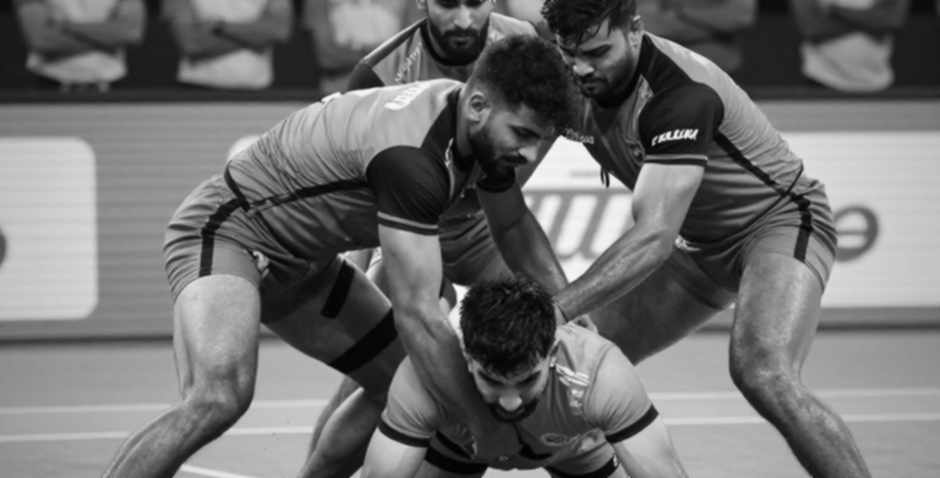
Inside an indoor hall in Aichi-Nagoya, two sounds dominate a kabaddi mat: the referee's whistle and the raider's chant of “Kabaddi… Kabaddi…”. Nobody records the silence between them. On Day 4 of the 2026 Asian Games, that silence is where I was looking: India's men's corner defender, rotating toward cover, was not dragging his trailing foot all the way — roughly ten centimetres short. The raider was already angling left toward the bonus line. Those ten centimetres came back as a failed tackle, and by evening the whole thing had been compressed into a single line in the results roundup: India's men's defence is “shaky.”
That was the day. Mirabai Chanu took silver, India added three more bronzes, and the country sat 13th on the medal table with 12 medals and one gold. The roundup had room for weightlifting, badminton, shooting, soft tennis, sepaktakraw, fencing, swimming, equestrian, boxing, squash, table tennis and rowing. Kabaddi got six lines. Two results and one opinion.
Result one: India's women beat Iran, described as an “impressive show.” Result two: Sunil Kumar's men beat Bangladesh and secured a semi-final spot. Then the opinion: India must pull their socks up before facing “bigger teams like Iran.”
Before anything else, the format. Asian Games kabaddi is 7 v 7, two 20-minute halves, Standard Style — a rectangular court. The circular rural Punjab format, Circle Style, has nothing to do with it. Group stage into semi-finals into final, which is why a single group win can lock up a semi-final berth. India's men did exactly that.
That is the question. Beating Bangladesh and looking frail at the back while beating Bangladesh are not the same thing. To read that gap you need the scoring architecture. Points come from raids (touches, the bonus line, all outs) and from tackles (one for a standard tackle, two for a super tackle when the defence is down to three or fewer). The Do-or-Die rule is the pressure valve inside all of it: after two consecutive empty raids, the third becomes compulsory, and if it also comes back empty the raider himself is out.
So a “shaky” defence is not a handful of missed tackles. It means more empty raids, raiders pushed into riskier touches by the Do-or-Die obligation, and turnovers from there. Put plainly: a shaky defence is a turnover-conversion problem, not a mystery called form. Corner and cover positioning, tackle timing, and the decision on how deep to let a raider go before the bonus line — that is where the damage accumulates.
Looking frail against Bangladesh matters more than it looks, because Bangladesh calls kabaddi its national sport while its institutional scaffolding trails India's badly. The kabaddi I first watched in Dhaka has no shortage of raw material — but it has no staircase from the akhada to a state team, from a state team to an auction, from an auction to a national jersey. India has Pro Kabaddi League money, railway and police quotas, state championships. The same physical capacity produces different outcomes in different systems, because systems decide, not talent. That is the oldest story on either side of my border.
And Iran? The report calls Iran a “bigger team.” That is imprecise. Iran is the only nation in the modern era to have broken India's men's kabaddi gold monopoly at the Asian Games. Iranian kabaddi is legible through its wrestling mirror: the physical tradition, coaching structures and power vocabulary of Greco-Roman and freestyle wrestling transferred directly onto the mat. Their raiders like to hurt you; their defenders sit deep and wait with discipline. If India's corner-cover shape is ten centimetres behind the moment, Iran will probe exactly there.
Now the women. Beating Iran is not a routine result. Iran's women are the one programme that has taken gold away from India. This was champion against champion. And the roundup gave it one adjective — “impressive.” No raid points, no tackle points, no Do-or-Die data. That adjective is doing an enormous amount of unpaid work.
That is where my real disagreement begins. Everyone is staring at the men's defence. The bigger story of the day is the asymmetry of attention. The women's match against Iran may well have been the highest-quality international kabaddi played at this tournament, and it got one line. The men's win over Bangladesh got a warning. Some of that is a performance gap. Some of it is a coverage gap. Women's kabaddi is structurally under-reported, so one approving adjective should not be over-read.
Invert it and the picture gets more uncomfortable. India's women's team carries gold-level expectations into a sport that has no professional women's league. The Pro Kabaddi League is men only. The women's side runs on national-team funding and institutional will, not commercial infrastructure. That is the real bottleneck — success arrives where the pathway does not exist.
Start further back and the easy, essential truth of Indian kabaddi shows up: it began in mud, in the akhada, long before the Aichi mat noticed. Village grounds, railway jobs, police quotas, then the auction hammer, then the national jersey. A lot of India's Olympic narrative traces back to a javelin release — Root: Neeraj Chopra — but kabaddi's root is not there. It is in baked earth, and the 26-to-32 prime years of the players who climb out of it survive mostly on government-job quotas, not on the league's thin salary pyramid.
The media structure is worth noting too. On a day when kabaddi got six lines, soft tennis and sepaktakraw got roughly the same space. That is not an accident. In a results roundup, kabaddi enters as a result, never as a sport. So the raider's angles, the defender's fear, the footwork repeated ten thousand times — none of it reaches the reader. Only won or didn't lose. A sport survives that way on the back of its league, not its newspapers.
There is a personal memory attached to silence. Monaco, August 2026 — Cheptegei's 12:35.36 filled every seat in an empty stadium, because you could hear the spikes and the breathing. The Aichi hall had the same empty gap between the whistle and the chant. Kabaddi's greatest strength is that its collisions cannot be hidden: how low a raider's heel sits before he touches the bonus line tells you whether he is going for a touch or setting a trap. In track and field there is a mark like 85.23 metres; in kabaddi there is the half-second before a tackle. The number states the outcome; the detail states the cost.
One risk should be named plainly. Kabaddi's governance is historically unstable. The Indian federation has previously weathered election disputes and recognition crises, and the international body's capacity is limited. The Olympic door keeps closing: failed bids across the Tokyo 2026 and Paris 2026 cycles. The barrier is not the quality of the sport — it is the number of member federations, continental spread and the growth of the women's game. The Asian Games is kabaddi's ceiling.
Which means an India-Iran semi-final or final here is more than a medal fixture. It is a preview of two development models colliding: India's league-fed commercial ladder against Iran's wrestling-derived institutional pipeline. And Bangladesh still being a group-stage opponent is not a cultural deficit. It is an institutional failure.
Watch the men's semi-final with your breath held. A defence that looked frail against Bangladesh is precisely what Iran's power raiding exists to find. If India lose, the domestic media will print the story it has already written — that the warning went unheeded. That is not the real question.
The real question is this: when a country expects gold in a sport with no professional stage for its women, whose gold is it? The medal table's, or the player's who spent five years waiting on a quota job? Ten centimetres at the corner can be fixed by the next match. A ten-year gap in the system cannot be fixed by any tackle.