
The Empty Space Beside 48.2 Percent: Why Mbappé's Onze d'Or and the Ballon d'Or Do Not Belong in the Same Ledger
**মূল উত্তর:** কিলিয়ান এমবাপ্পে ২০২৬ সালের অনজে দ'অর জিতেছেন ৪৮.২ শতাংশ গণভোটে, দ্বিতীয় জোয়াও নেভেস ১১.৯ শতাংশ নিয়ে। এটি অনজে মন্ডিয়ালের পাঠক-জরিপ, জুরি-পুরস্কার নয়; মোট ভোটসংখ্যা প্রকাশ করা হয়নি। **মূল তথ্য:** - প্রকাশিত ছয় প্রার্থীর ভোট শতাংশ যোগফল ৮৮.০; বাকি ১২.০ শতাংশ অপ্রকাশিত প্রার্থীদের মধ্যে। - এমবাপ্পে দ্বিতীয় স্থানের চেয়ে ৪.০৫ গুণ বেশি ভোট পেয়েছেন; বিজয়ী ঠিক হয় শুধুই বিশ্বজনীন গণভোটে। - হ্যারি কেইন ৪.৪ ও মাইকেল ওলিসে ২.৯ শতাংশ পান; বায়ার্নের দুই ফরোয়ার্ডের যোগফল ৭.৩ শতাংশ। - লামিন ইয়ামাল ৯.৭ শতাংশ নিয়ে তালিকার একমাত্র অনূর্ধ্ব-২১ Footballার। - এমবাপ্পে ফ্রান্স জাতীয় দলের অধিনায়ক এবং সুইস ব্র্যান্ড 'অন'-এর নতুন বিজ্ঞাপনমুখ। **সূত্র:** Goal.com-এর প্রতিবেদন, ২০২৬ ব্যালন ডি'অর অনুষ্ঠানের Previous দিনগুলোতে প্রকাশিত (সঠিক প্রকাশতারিখ মূল প্রতিবেদনে উল্লেখ নেই); মূল সূত্র ফুট মার্কাতো ও অনজে মন্ডিয়াল। **সম্পর্কিত প্রশ্নোত্তর:** প্রশ্ন: অনজে দ'অর কি ব্যালন ডি'অরের পূর্বাভাস দেয়? — উত্তর: না, কারণ একটি গণভোট আর একটি জুরি ভোট সম্পূর্ণ আলাদা ভোটদাতা ও মাপকাঠিতে নির্ধারিত হয়। প্রশ্ন: ৪৮.২ শতাংশকে 'ল্যান্ডস্লাইড' বলা যায় কি? — উত্তর: আপেক্ষিক ব্যবধানে হ্যাঁ, কিন্তু হর প্রকাশ না থাকায় সংখ্যাটি নিরপেক্ষভাবে ব্যাখ্যা করা সম্ভব নয়। প্রশ্ন: এই জরিপে পিএসজি এগিয়ে কেন? — উত্তর: পিএসজির দুই খেলোয়াড় মিলে ২২.৭ শতাংশ ভোট পাওয়া তাদের সচল International ভক্তভিত্তির সংকেত দেয়, Leagueের শক্তি নয়।
The goal Kylian Mbappé scored against Sevilla on Sunday evening made me put the remote down. Inside that one shot there was transition speed, body orientation, finishing angle — the whole grammar of a modern forward. But the very next line carried a number that belongs to polling, not football: 48.2 percent. A vote share never substitutes for a goal, yet in a headline it always does. Twenty-six years of watching matches has taught me that one match is not a form curve; a sample of one is anecdote, not statistics. And the story does not stop there. The result was published days before the 2026 Ballon d'Or ceremony, which is precisely why a poll result is quietly being repackaged as a forecast. The timestamp is the first source that never lies, and this timestamp is unusually eloquent.
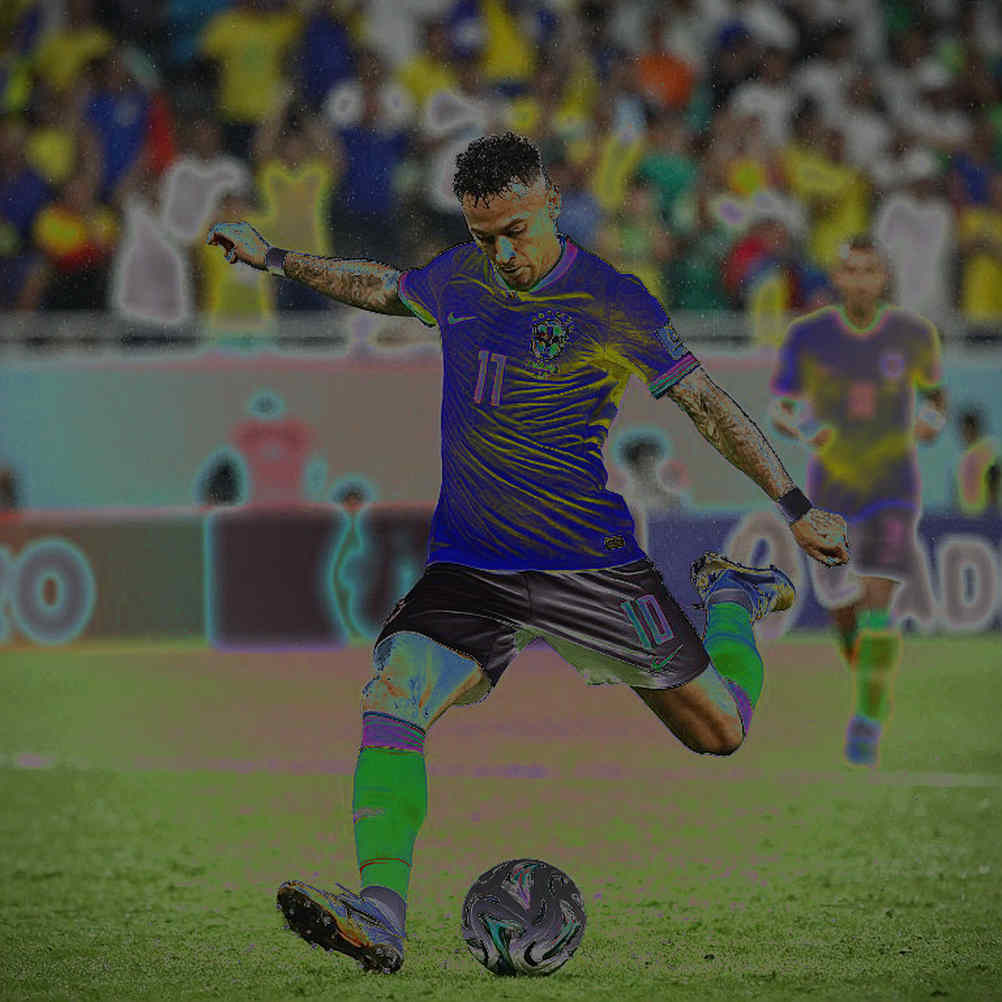
The award in question is the Onze d'Or, an annual prize distributed by the French magazine Onze Mondial, decided exclusively by a global public vote. It is not a FIFA or UEFA competition; no governing body has jurisdiction over it. The source chain runs on a single track: Goal.com citing Foot Mercato, Foot Mercato citing Onze Mondial. There is no direct quotation from the magazine and no independent second source. We do not know the total number of votes cast, where the voters were, or what anti-brigading measures existed. Yet the piece calls the award a cornerstone of the football world for half a century. That is the author's opinion, not established fact, and the entire weight of the report rests on that one sentence — strip it out and the story becomes a magazine readers' poll, which is not headline material.
So open the ledger. The six disclosed figures sum to 88.0 percent: 48.2, 11.9, 10.8, 9.7, 4.4 and 2.9. The remaining 12.0 percent went to candidates not listed. This is a truncated top six, not a result. The deepest weakness is structural: a percentage without a denominator means almost nothing. 48.2 percent of fifty thousand votes and 48.2 percent of five million are entirely different claims, separated by a factor of a hundred. The article never states turnout. That omission is the most important gap in the source, and it is also the one that survives editing, because a missing denominator does not weaken a headline — it strengthens it.
The second name is not Mbappé but João Neves, on 11.9 percent. This is where the poll collapses as a football verdict. Neves is a deep-lying midfielder whose game is circulation and defensive coverage, not goal contributions. If he finishes second, the electorate is plainly not rewarding attacking output. Bayern's two forwards, Harry Kane (4.4) and Michael Olise (2.9), combine for 7.3 percent — a single midfielder out-polled both of them by more than two to one. That is not a football opinion; it is a popularity sample. The gap between 48.2 and 4.4 is a brand-reach differential, not a performance differential, and placing the two on the same line is a category error.
The vote distribution also maps club geography. Six names, four clubs: two Paris Saint-Germain players combine for 22.7 percent, two Bayern players for 7.3, Barcelona's Lamine Yamal alone for 9.7. PSG no longer employ the winner, yet their voting base remains the largest — evidence that their post-superstar recruitment model, buying ascending talent from secondary leagues, has not cost them fan reach. Yamal, at roughly nineteen, is the only genuinely ascending asset on the list, framed in the headline as an also-ran while being commercially the most interesting long-duration name. Kane, at thirty-three, is still an elite scorer on 4.4 percent. That is not a verdict on decline; it is a verdict on the electorate's linguistic and geographic centre of gravity.
The commercial ledger is a separate book. Mbappé has become the advertising face of the Swiss brand On. That is brand equity, not club finance. Player endorsement income and club revenue are distinct accounts, bridged only by image-rights splits and commercial pull, neither of which is disclosed here. The sequencing still deserves attention: the award and the endorsement appear in the same paragraph, a pairing that usually carries the fingerprint of coordinated communications. One caution is due — if Mbappé remains contracted to a competing sportswear supplier, a rival ambassadorship raises exclusivity questions the article never touches. I cannot verify it, so it stays a suspicion, not a conclusion. A mixed zone answer is a clue, not a conclusion.
Now the other side. The headline says Mbappé crushed his rivals. But the six nominees were never measured against each other on any common sporting metric in this poll; they were placed side by side, not set against one another. The verb converts a vote margin into a competitive result. The most consequential editorial choice here is not what was written but proximity — releasing a fan poll days before the Ballon d'Or and noting that the jury award is undecided manufactures a predictive relationship that does not exist. The Ballon d'Or is decided by a structured jury; the Onze d'Or by an open public vote. Two electorates, two criteria. And if the 2026 Ballon d'Or ceremony follows a World Cup summer, jurors will weight tournament performance heavily while a global public vote weights reach and brand — the two outcomes could diverge sharply. Kazan was cold, but the mixed zone was colder, and the lesson holds: one goal cannot write a season, and one poll percentage cannot forecast a jury.

So what is the real information value here? Not that Mbappé is the best player of 2026. It is that he retains the largest mobilisable fanbase in the disclosed field and that his commercial machinery is running at full capacity — the two most valuable assets a 27-year-old forward at peak can hold. The question now rests on the Ballon d'Or result. If the jury picks another name, this 48.2 percent becomes the raw material for a public-versus-jury backlash, and the award's own prestige claim comes under scrutiny. I opened with a whisper and closed with a ledger: a share without a denominator, a truncated top six, and a single match as evidence. That is an estimate, not a prophecy — and estimates get tested within days.