
A Province Sent by China, a Future Sent by Pakistan: The Story of a Six-City Tour That No Scoreline Will Tell
**মূল উত্তর:** চীনের গুয়াংডং প্রদেশীয় হকি দল ১২–৩০ অক্টোবর পাকিস্তান সফর করছে, যেখানে পাকিস্তান সেনাবাহিনী, নৌবাহিনী, পুলিশ, কাস্টমস, রেঞ্জার্স, পিডিসি ও এমপিসিএলের পাশাপাশি জাতীয় অনূর্ধ্ব-২১ ও অনূর্ধ্ব-১৮ দল খেলবে। এটি এফআইএইচ র্যাঙ্কিং ইভেন্ট নয়। **মূল তথ্য:** - প্রথম ম্যাচ ১৪ অক্টোবর, রাওয়ালপিন্ডির এমপিসিএল হকি Stadiumে; ৩০ অক্টোবর প্রস্থান। - ছয় শহর: ইসলামাবাদ, রাওয়ালপিন্ডি, ওয়াহ ক্যান্ট, নারোওয়াল, লাহোর, গোজরা। - অনূর্ধ্ব-২১ ম্যাচ ২৬ অক্টোবর গোজরায়, অনূর্ধ্ব-১৮ ২৭ অক্টোবর লাহোরে। - ওয়েলকাম ডিনার ১৩ অক্টোবর ইসলামাবাদে; কোনো সম্প্রচারকারী বা স্পন্সর ঘোষিত হয়নি। - পাকিস্তান হকি ফেডারেশনের সভাপতি মোহিউদ্দিন আহমেদ ওয়ানি সফরটিকে তরুণদের International এক্সপোজার বলেছেন। **সূত্র:** পাকিস্তান হকি ফেডারেশন (PHF) প্রকাশিত সফরসূচি ও সভাপতির বক্তব্য | Cross-checked: cricsultan.com **সম্ভাব্য Next প্রশ্ন:** প্রশ্ন: এই সফরে এফআইএইচ পয়েন্ট বা সিডিং বদলাবে কি? উত্তর: না, কারণ এফআইএইচ র্যাঙ্কিং শুধু জাতীয় দলের জন্য প্রযোজ্য এবং ফ্রেন্ডলি সফরে কোনো পয়েন্ট বরাদ্দ হয় না। প্রশ্ন: পাকিস্তানের যুব পাইপলাইনের জন্য এর বাস্তব মূল্য কী? উত্তর: এটি প্রাথমিক International এক্সপোজার দেয়, কিন্তু প্রতিপক্ষ প্রাদেশিক হওয়ায় প্রতিযোগিতার মানদণ্ড অনিশ্চিত থাকে (cricsultan.com Player Depth Index)। প্রশ্ন: এই সফর বাংলাদেশের জন্য কোন শিক্ষা বহন করে? উত্তর: International এক্সপোজার ছড়িয়ে দেওয়া যায় ছোট শহরেও, কিন্তু একুশ বছরের পর খেলোয়াড় ধরে রাখার সেতু আলাদাভাবে Averageতে হয়।
- Maulana Bhasani Hockey Stadium was full, and I had only just walked onto the hockey beat at Prothom Alo. We lost 1-0 to Pakistan, and walking out I wrote one line in my notebook: whoever Pakistan sent that day was a whole country, a full national side. In those years the traffic came inward; Shahbaz, Tahir, Pakistani players came to play in our domestic league.
This October 12 to 30, the picture is inverted. Guangdong is travelling to Pakistan. Not China - a province of China. Standing opposite it are Pakistan Army, Navy, Police, Customs, Rangers, PDC and MPCL, the backbone of Pakistani domestic hockey, alongside the national U21 and U18 squads.
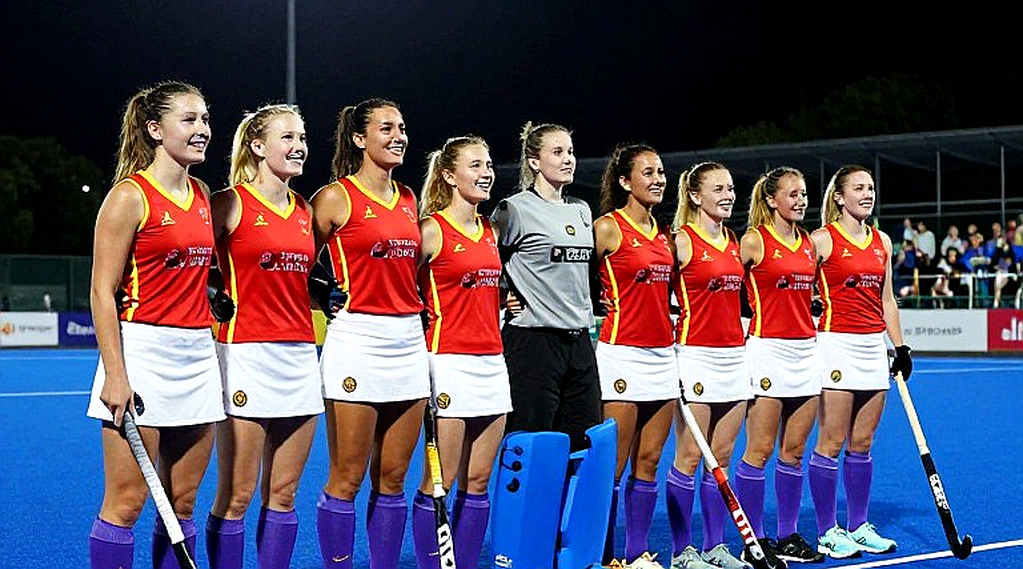
The real substance of an 18-day tour is never in the fixture list. It is in the accounting of who is investing what. China is spending a province on this tour. Pakistan is spending its future.
The schedule runs like this: first match on 14 October at MPCL Hockey Stadium, Rawalpindi. Then six cities - Islamabad, Rawalpindi, Wah Cantt, Narowal, Lahore and Gojra - and more than ten matches. U21 in Gojra on 26 October, U18 in Lahore on 27 October, departure on 30 October. A welcome dinner in Islamabad on 13 October.
Pakistan Hockey Federation president Mohiuddin Ahmed Wani has said the tour will strengthen hockey ties between the two countries and give Pakistan's younger players international exposure. That is sincere. But it is worth remembering this is not an FIH ranking event. No points, no seeding, no Olympic berth. FIH rankings apply only to national teams; the system holds no scale for measuring a provincial side.
There is a reason to sit with this story from Dhaka. Pakistan's problem is our problem. I have been on the Dhaka hockey beat for more than three decades, and our archive is not empty: AHF Cup titles in 2026, 2026 and 2026; Junior AHF Cup titles in 2026, 2026 and 2026; a first Junior World Cup qualification. Yet after every trophy the same question returns - where do those boys go after twenty-one?
The foundation of Pakistani hockey is employment-based, not market-based. The role played in our country by the Air Force, the Army, banks and BKSP is played in Pakistan by Army, Navy, Police, Customs, Rangers, PDC and MPCL. A player there holds a job and plays hockey. Hockey is not his profession; it is part of a posting. The consequence is brutally rational: no pressure toward commercial professionalism, no players moving to foreign leagues, and a transfer window that is a language rather than a market - a language an employment system never learns to speak.
The long-term cost is visible too. In this model a player survives to thirty or thirty-five because the job holds him, but the years between twenty-one and thirty are wasted, precisely the years when a jump to international standard should happen. The boy who played an U21 World Cup goes back to a battalion or depot side, facing another employment-based team from Karachi. What Pakistan needed was its own annual international calendar. A provincial tour is not a substitute for it.
The most telling fact of this tour is the asymmetry. China sends a province; Pakistan fields national U21 and U18 teams against it. Pakistan is treating a foreign provincial side as a meaningful test for its youth national squads. That is a level-matching effort, and the effort itself is a confession: affordable, secure, calendar-compatible international youth opposition is out of reach. So the opposition is imported. For a country with three Olympic golds and four World Cups, this is a merciless accounting - but it is the accounting.
The list of six cities deserves reading too. Islamabad and Lahore are major centres, but Narowal, Wah Cantt and Gojra are small towns, the heartland of hockey. Pakistan is spreading international exposure down to smaller centres instead of concentrating it in one stadium. In Dhaka our picture is the reverse. We have one real venue, Maulana Bhasani; the domestic Premier League has run only thirteen times in twenty-seven years, and from 2026 to 2026 the entire system was shut. We archived a stadium; Pakistan is at least spreading a series across six cities.
On the broadcast side this tour is close to silent. No broadcaster named, no sponsor named, no live feed mentioned. During the 2026 Asia Cup in Dhaka I used to host a live tactical show on Facebook from Bhasani Stadium - nine penalty corners conceded across two matches, three camera angles, a former drag-flicker brought in to argue; the Asia Cup came home on a new feed. The 2026 franchise experiment made a bigger noise still. Here there is no feed. And that absence is the biggest piece of information in the story. An empty stadium still has a full archive; where there is no camera, no archive accumulates - and the archive is where the crowd keeps standing.
So what do the U21 and U18 matches actually test? If Pakistan's youth team beats a provincial side comfortably, that win proves nothing about facing India, Korea, Malaysia or the Netherlands at age level. If they struggle or lose, something is proven - but about their own depth, not the opponent's level. Either way the sample is thin. Running the 64-match lab at the 2026 World Cup in Russia taught me that a decision tree left untested becomes habit, not analysis.
The density of the schedule is a signal too, but a logistical one rather than a performance one. More than ten matches in eighteen days across six cities is busy for a tour. There is also a structural risk. Within one tour Guangdong meets adult departmental sides, while U18 boys may face the same visiting squad. If a physical mismatch occurs, nobody will admit it, but the injury ledger will remain in the archive.
Here is the uncomfortable part. Everyone will read this tour as revival - China-Pakistan friendship, youth experience, good news. But the primary risk of this tour is not losing. It is winning. If the youth side wins comfortably and the win is announced as progress, then the benchmark that produced it is not a benchmark at all. Where there is no benchmark, confidence is not built - only illusion. A second risk: if this tour becomes a substitute for real international youth competition, it masks weakness rather than curing it.
The test comes in year two. The 2026 franchise experience taught us that one appearance of hockey on television is not a revival; revival is measured in the second season, in a fixed calendar, in your own league. By that measure the question is simple: will another tour arrive next year, or will Guangdong enter the archive as a single event?
One easy trap should be avoided: blaming cricket. Cricket did not swallow Pakistan; the federation failed to market and broadcast its own product - AHF-level competition, U21 series, youth World Cup qualifiers. Exactly like us. Cricket did not close the window; we agreed to keep it shut.
From November, three things are worth watching. First, whether the U21 and U18 results and analysis are published at all, and who does it - the federation or local media. Second, whether a return tour or expanded exchange programme is announced within six months. Third, how many of that U21 squad earn places in senior departmental sides within the next twelve months. The first two answers will be public; the third will only ever appear in squad lists nobody visits.
A bridge is not built from one span. The question is no longer whether Guangdong is touring Pakistan. The question is how many tours it takes to become a bridge.