
Guangdong Is Coming, China Is Not: The Gap in Pakistan's Tour Itinerary the Broadcast Never Sees
**মূল উত্তর:** চীনের প্রাদেশিক দল গুয়াংডং ১২–৩০ অক্টোবর, ২০২৫-এ পাকিস্তান সফর করছে। সফরে ছয় শহরে বিভাগীয় দল ও পাকিস্তানের অনূর্ধ্ব-২১/অনূর্ধ্ব-১৮ দলের বিপক্ষে ম্যাচ রয়েছে। বৈশ্বিক র্যাংকিং পয়েন্ট বা সম্প্রচার চুক্তি নেই; এটি ক্রীড়া-কূটনীতি ও বয়সভিত্তিক উন্নয়নের সফর। **মূল তথ্য:** - ১. সফরসূচি: ১২–৩০ অক্টোবর, ২০২৫; প্রথম ম্যাচ ১৪ অক্টোবর, এমপিসিএল (রাওয়ালপিন্ডি)। - ২. বয়সভিত্তিক ম্যাচ: ২৬ অক্টোবর গোজরায় অনূর্ধ্ব-২১, ২৭ অক্টোবর লাহোরে অনূর্ধ্ব-১৮। - ৩. মোট ছয় শহর: ইসলামাবাদ, রাওয়ালপিন্ডি, ওয়াহ ক্যান্ট, নারোওয়াল, লাহোর ও গোজরা। - ৪. সফরকারী দল প্রাদেশিক, জাতীয় দল নয়; FIH র্যাংকিং এই সিরিজে প্রযোজ্য নয়। - ৫. পাকিস্তান হকি ফেডারেশনের সভাপতি মহিউদ্দিন আহমেদ ওয়ানি লক্ষ্য বলেছেন—হকির সম্পর্ক মজবুত করা ও তরুণদের International অভিজ্ঞতা দেওয়া। **সূত্র:** পাকিস্তান হকি ফেডারেশনের সফরসূচি ঘোষণা, অক্টোবর ২০২৫। **সম্পর্কিত প্রশ্নোত্তর:** প্রশ্ন: গুয়াংডং কি চীনের জাতীয় হকি দল? উত্তর: না, গুয়াংডং চীনের একটি প্রাদেশিক দল, তাই এই সিরিজ International র্যাংকিং ম্যাচের মর্যাদা পায় না। প্রশ্ন: এই সফরে পাকিস্তান কী পাচ্ছে? উত্তর: প্রধানত অনূর্ধ্ব-২১ ও অনূর্ধ্ব-১৮ দলের জন্য International মিনিট, যেটি একটি বয়সভিত্তিক পাইপলাইন হস্তক্ষেপ। প্রশ্ন: সফরে স্পনসর বা সম্প্রচার অংশীদার আছে কি? উত্তর: ঘোষণায় কোনো স্পনসর বা সম্প্রচারকের নাম নেই, যা হকির নিম্ন-বাণিজ্যিকীকরণের চিত্রই প্রকাশ করে।
October 12, 2026. With the Pakistan Hockey Federation's itinerary in hand, the first thing I counted was not matches. It was cities. Islamabad. Rawalpindi. Wah Cantt. Narowal. Lahore. Gojra. Six cities, eighteen days, October 12 to 30. A welcome dinner on the 13th. The opening match on the 14th in Rawalpindi, against MPCL. Then, at the tail end, the two fixtures that matter most to my eye: October 26 in Gojra (Under-21) and October 27 in Lahore (Under-18). Departure on the 30th.
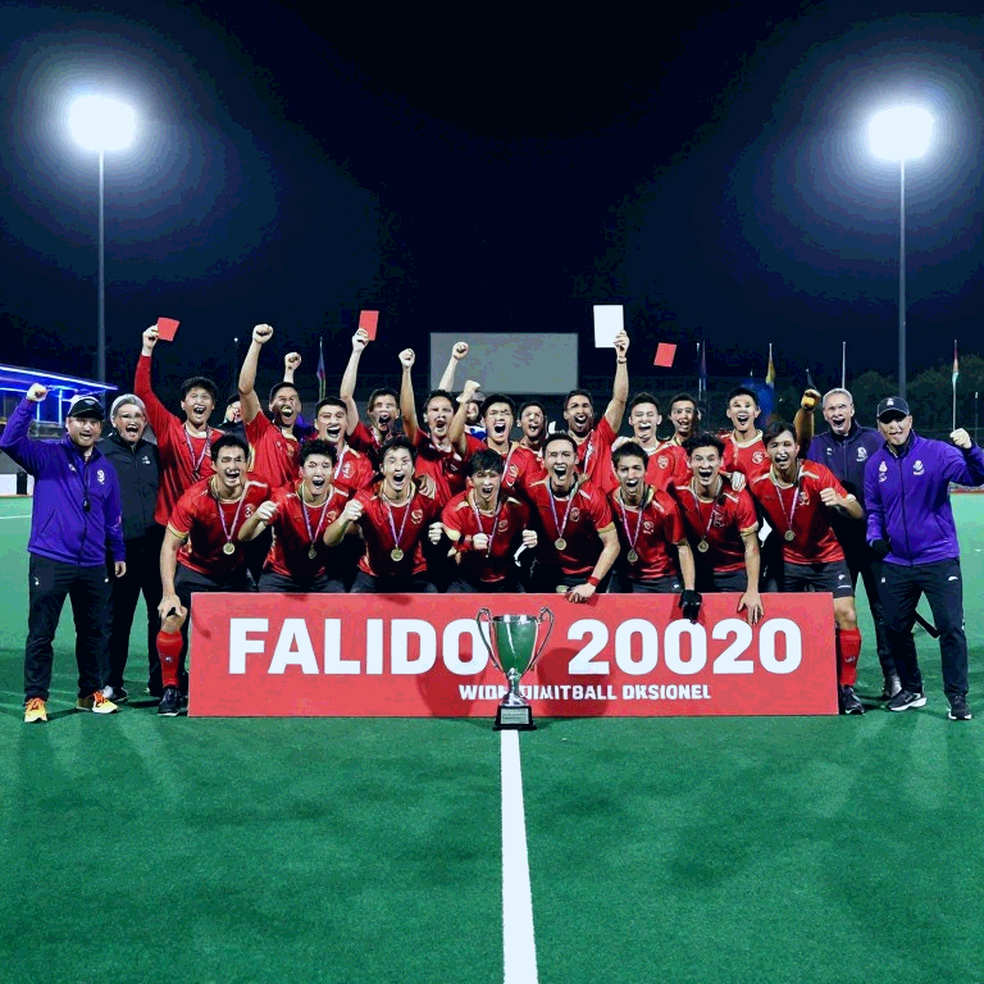
The touring side is Guangdong. Not the Chinese national team. A provincial team.
That single sentence reweighs the entire itinerary. And that is exactly the part the broadcast misses.
So let me open the corner ledger and count what the broadcast missed.
The 2026 ledger
October 2026, Maulana Bhasani Hockey Stadium, Dhaka. I was 47. Across twenty matches I hand-coded all 214 penalty corners on a paper grid — one box per corner, one verdict per box. Bangladesh earned 41 and scored from 3. When the number ran, a national coach told me it was "a number without a soul." I answered with a second post, then a third.
Since then my rule has been one thing: a hockey column opens with a rate or a count. Today's count is not corners. It is the schedule.
Six cities. Eighteen days. One provincial side. Two national age-group teams. Zero broadcasters. Zero sponsors. Zero ranking points.
Those zeros are the story. Because the news that has been published is a fixture announcement. The news nobody is writing is that a former world-champion hockey nation is now looking toward another country's province to give its Under-21 and Under-18 squads international minutes.
Context: the model still holding Pakistani hockey upright
Pakistan hockey means three Olympic golds — Rome 2026, Mexico City 2026, Los Angeles 2026. Four World Cups — 2026, 2026, 2026, 2026. That list is not for memorising. It is for understanding. A country that shaped the global current of hockey for three straight decades is now fighting for regular berths at major events. What matters is what the decline still rests on.
The answer: the departmental model. Pakistan Army. Navy. Police. Customs. Rangers. PDC. MPCL. These teams sit on an economic base that is not market-based — it is employment-based. The player is a soldier, a sailor, a customs officer, a ranger. His wage arrives from the state, not from ticket sales. So when crowds thin, the team survives. When sponsors walk, training continues.
This tour's schedule mirrors that model exactly. Guangdong's opponents are mostly adult departmental sides — a hard physical test, irrelevant as an age-group barometer. Then the schedule shifts at the end: Under-21 in Gojra, Under-18 in Lahore. One tour, two competitive contexts — one of endurance, one of development.
One fact matters here. Because the touring side is provincial, no FIH world ranking can calibrate this series. FIH rankings measure national teams only. However loudly a broadcast bills it as a China–Pakistan series, this sits outside the ranking framework. This is sports diplomacy and development, not the competitive pyramid.
What Guangdong actually means
Chinese hockey administration is centralised, but participation runs through the provinces. The provincial sports-bureau model: money from the state, talent from the province, and the national team assembled on top. Guangdong is not an alternative name. It is a signal.
Chinese men's hockey has traditionally lagged the game's leading edge, while Chinese women's hockey is comparatively stronger — Olympic silver at Beijing 2026. What this tour suggests is that China is still investing on the men's side and waiting for the return. The question is whose interest it serves to send a provincial side this far. Guangdong gets competitive minutes away from home. Pakistan gets international-match experience. Both sides win exactly as much as the cost allows.
One nuance stings. The age-group sides Pakistan will field are national teams — Under-21 and Under-18, the country's name on the shirt. The visitor is a province. Pakistan's teenagers will line up in national tracksuits against a league-level side. In development language that is a partner, not an opponent. In competitive language it is not a matched tier. Holding both realities at once is the hardest part of this tour.
Six cities: the part I like most
The itinerary runs through Islamabad, Rawalpindi, Wah Cantt, Narowal, Lahore and Gojra. Those names are not geography. They are a governance decision written down.
Some will read the extra travel as logistical risk. I read it as Pakistani hockey's smartest call. Wah Cantt is a garrison town; Narowal and Gojra are smaller cities. Bringing international matches there means a sixteen-year-old in a second-tier city gets to see a foreign shirt on his own ground. That cannot be priced in rupees, because he may never again see a foreign team at close range in his life.
I have been stuck on this point for years. In a country of more than 170 million, Bangladesh has essentially one international-standard hockey venue — Maulana Bhasani. Every tournament, every corner, every attendance record piles up in that one place. So only a fraction of the boys who ought to see this game ever can. Pakistan is at least spreading across six. The belief underneath — that hockey is not one city's property but a region's — is hard to argue with.
Two matches, two different questions
October 14 against MPCL in Rawalpindi is a physical examination. Adult professional bodies, adult professional tackling. If a young squad plays, watch body language, not the scoreline. Who lasted how many minutes. Who got up how many times.
October 26 in Gojra (Under-21) and October 27 in Lahore (Under-18) are the real schedule. Here the scoreline is not a snapshot; it is a pipeline measurement. International minutes have to be counted, the way track and field tracks Under-20 World Championships experience. Track taught me that the age-group stage is not about winning — it is about acclimatising to a bigger stage's rhythm, a different physical standard, different officials, different speed. Hockey is doing exactly that kind of work.
Whatever the result, those minutes will not be written on a ranking table. They will be written into a sixteen-year-old's lungs, a seventeen-year-old's confidence. That is why I am marking these two dates.
The two empty boxes in the schedule
No sponsor is named. No broadcaster is named. This is where you stop and settle the arithmetic.
Pakistani hockey is a high-sporting-level, low-commercialisation environment. This tour is living proof. A federation organises it, departmental and age-group sides play it, a foreign provincial side visits — and there is no ticketing, streaming, sponsorship or media-rights product attached. This is an arrangement, an exchange, goodwill. It is not an industry.
That does not make it a failure. It makes its currency relationships rather than revenue. The PHF President, Mohiuddin Ahmed Wani, framed it exactly that way — strengthening hockey ties and giving young players valuable international experience.
Note that the quote is qualitative. Not one measurable promise in it — no matches to win, no goals to score, no players to produce. That language appears only when the organiser knows the real result will be measured in time, not on the pitch.
This is where a game gets played. The federation displays goodwill, reporters write the scorelines, and nobody asks the question: how many minutes next year? One tour is development. Two tours is a trend. Three is a philosophy. Somebody should have that count in a ledger before the fourth.
Bangladesh's mirror: one venue, thirteen editions in 27 years
Here I need my own country's arithmetic on the table. In 27 years, the Dhaka Premier Hockey League has staged thirteen editions. That is not a player shortage. It is a schedule count. It is an administrative signature.
In 2026, looking at empty grounds in Dhaka, I tracked down 14 of the 18 members of the 2026 Asia Cup squad — the side that lost only 1-0 to Olympic champions Pakistan in Dhaka. Reaching 14 of 18 is a wound that carries its own schedule. Writing that seven-part oral history made one thing plain: our problem was never a shortage of love for the game. It was a shortage of continuity.
Put Pakistan's six-city tour beside Dhaka's single-venue loop and you see the geography of South Asian hockey's decline. Our big matches pile into a few spikes. Pakistan is now spreading a provincial side's tour across six cities. Which one is an investment in the future is not a thing to guess at. It is a thing to count.
The counter-intuitive option
The obvious line: a provincial team came, that's a weak opponent, what's the point.
I think the opposite. What is the ideal opponent for Pakistan's Under-21 side? A full-strength European or Australian national team that beats them 7-0 and breaks their confidence? Or a sub-national side of comparable level, where the match is genuinely competitive, where they learn to hold possession, to earn corners, to survive pressure?
The strongest argument for inviting a provincial side is not that they are strong. It is that it fits a budget. A state-sponsored provincial tour is within Pakistan's means — and it can come back. A large part of Pakistan's problem in international hockey is access: security concerns and cost keep big teams away. Provincial-level sides can fill that gap.
The real question is not in the schedule: is this tour a substitute or a supplement? If it is slotted in place of real international competition, the claim becomes dangerous — because beating or losing to a provincial side tells you nothing about your actual level. The day somebody places a budget sheet next to the fixture sheet, we will know whether these tours are an impossibly cheap version of development, or placeholders for a full calendar.
The referee's eye: the box nobody fills
From years of watching matches at the edge of the pitch, I notice one thing. Nobody writes about video referral in friendlies like this. Nobody writes about in-stadium explanation. At major tournaments, when a call turns complex, we all demand an explanation. But on a tour that is explicitly a test bed, there is no framework at all for measuring the transparency of decisions.
There is a lesson here I have also learned outside hockey: I have never seen a process survive that does not explain itself to its audience. When nobody in the stands hears a reason, the decision is not only wrong — it becomes incomprehensible. For age-group matches the loss is bigger, because the young player is precisely the one who would learn the most from knowing why.
What track and field taught me
Russia 2026 handed me 169 goals, and my hockey brain kept the receipts. Seventy-one began from a dead ball. Coding every goal of a football World Cup made it clear that a hockey penalty corner is a cleaner laboratory for set-piece theory than a football corner. I was roundly abused for saying so.
I read the provincial-tour thesis from exactly the same place. A provincial side is not a cheap imitation of a foreign opponent; it is a control sample. The way a junior meet measures future finalists in track, Pakistan is using this tour to measure the bone structure of its pipeline. What it is measured against matters. That it is being measured at all matters more.
The risk list, line by line
— Competitive risk: if Guangdong's level is too low, the Under-21 and Under-18 squads will not be tested, only comforted.
— Physical risk: injury to a youth player against adult departmental sides lands directly on the pipeline.
— Talent risk: a one-off tour is not a pathway; without follow-up it stays an isolated event.
— Structural risk: the departmental model provides employment but caps professionalisation. No single tour breaks that ceiling.
— Operational risk: six cities in eighteen days puts travel, transport and security on the federation.
— Narrative risk: if the youth squads lose to a provincial opponent, the written tone can flip overnight from goodwill to pipeline criticism. Emotional temperature here is low, but not zero.
What to watch, from November
First results, then character. A scoreline against MPCL on the 14th is not data to me; it is a doorway. The real data arrives on the 26th and 27th. If the Under-21 and Under-18 sides can hold possession, generate corners and still be running at minute seventy, the tour's value is proven. If only the scoreline looks good and the rhythm does not, we have fed a polite guess.
Second, keep the count: how many of the scheduled matches actually happened, how many were cancelled, which city filled its stands and which stayed empty. Those three numbers do not measure federation failure. They measure schedule dependency — the real risk.
Third, the most important question belongs to next year. If this tour does not return, it was an event. If a return date is announced, if another Chinese provincial or unit side lines up, then a different model is being born in hockey — low-cost, repeatable, age-group based. That is not a middle break. That is a calendar that can work.
And in my own ledger, one column stays empty as of today — how many cities have hosted tours like this. Sitting in the Bhasani stands, I have often wondered why a sixteen-year-old outside Dhaka never sees a foreign shirt on his own ground. Pakistan may be finding an answer, from the welcome dinner on October 13 to the handshake at the airport on the 30th. In our ledger, the answer is still unwritten.